

How Towing Companies Handle Vehicles That Cannot Be Driven
Introduction
A vehicle that cannot be driven creates a very different towing situation from a routine roadside call. The engine may not start, the wheels may be damaged, the steering may not work properly, or the vehicle may have been involved in an accident. In some cases, attempting to move the car under its own power could cause additional damage or create a safety hazard.
That is where professional towing becomes more than simply connecting a vehicle to a tow truck. A towing company like Infront Towing must first determine what condition the vehicle is in, identify the safest way to move it, choose appropriate equipment, and transport it to the requested destination without causing unnecessary damage.
For drivers in the Dallas-Fort Worth area, this can be especially important after highway breakdowns, collisions, flat tires, mechanical failures, or situations where a vehicle has become disabled away from home.
Understanding how towing companies handle undrivable vehicles can help you make better decisions during an already stressful situation.
What Does It Mean When a Vehicle Cannot Be Driven?
An undrivable vehicle is one that cannot safely move under its own power. The reason can range from a simple mechanical failure to severe accident damage.
A vehicle may be considered undrivable if:
The engine will not start or has stopped running.
The transmission has failed.
One or more wheels are severely damaged.
The steering system is not functioning correctly.
The brakes are damaged or unsafe.
The vehicle has suffered collision damage.
A tire or suspension component has failed.
The vehicle is stuck and cannot safely move.
The electrical system prevents the vehicle from operating.
The vehicle has been damaged by a rollover, impact, or other incident.
A car that starts does not automatically mean it is safe to drive. For example, a vehicle involved in an accident may still run even though its steering, suspension, brakes, or body structure has been compromised. Learn more on how to tell if your vehicle is safe to drive after a breakdown.
Professional towing focuses on safe transportation, not simply getting the vehicle rolling again.
How Towing Companies Assess an Undrivable Vehicle
Before moving an inoperable vehicle, a tow operator generally needs to understand what happened and how the vehicle is positioned.
The driver may ask questions such as:
Does the engine start?
Can the vehicle roll?
Are the wheels turning?
Is the steering functional?
Was the vehicle involved in an accident?
Is there visible damage underneath the vehicle?
Is the vehicle stuck against another object?
Is it located on a highway, shoulder, parking lot, or private property?
Does it have special requirements because of its size or design?
The operator may also inspect the vehicle and its surroundings before selecting the appropriate towing method.
Why the Vehicle's Condition Matters
Different mechanical problems require different handling techniques.
A vehicle with a dead battery may simply need jump starts. A vehicle with a failed transmission may need to be transported rather than driven. A collision-damaged vehicle could require a flatbed because its wheels, steering, or suspension cannot safely support conventional towing.
The goal is to avoid turning a manageable breakdown into a more expensive repair.
How a Tow Truck Moves a Vehicle That Cannot Roll
Not every disabled vehicle can simply be driven onto a tow truck. The towing method depends on whether the vehicle can roll, steer, and support itself safely.
Professional operators may use equipment such as:
Wheel-lift systems
Winches
Straps and chains designed for vehicle recovery
Dollies or other specialized towing equipment when appropriate
The equipment selected depends on the vehicle's condition, configuration, location, and destination.
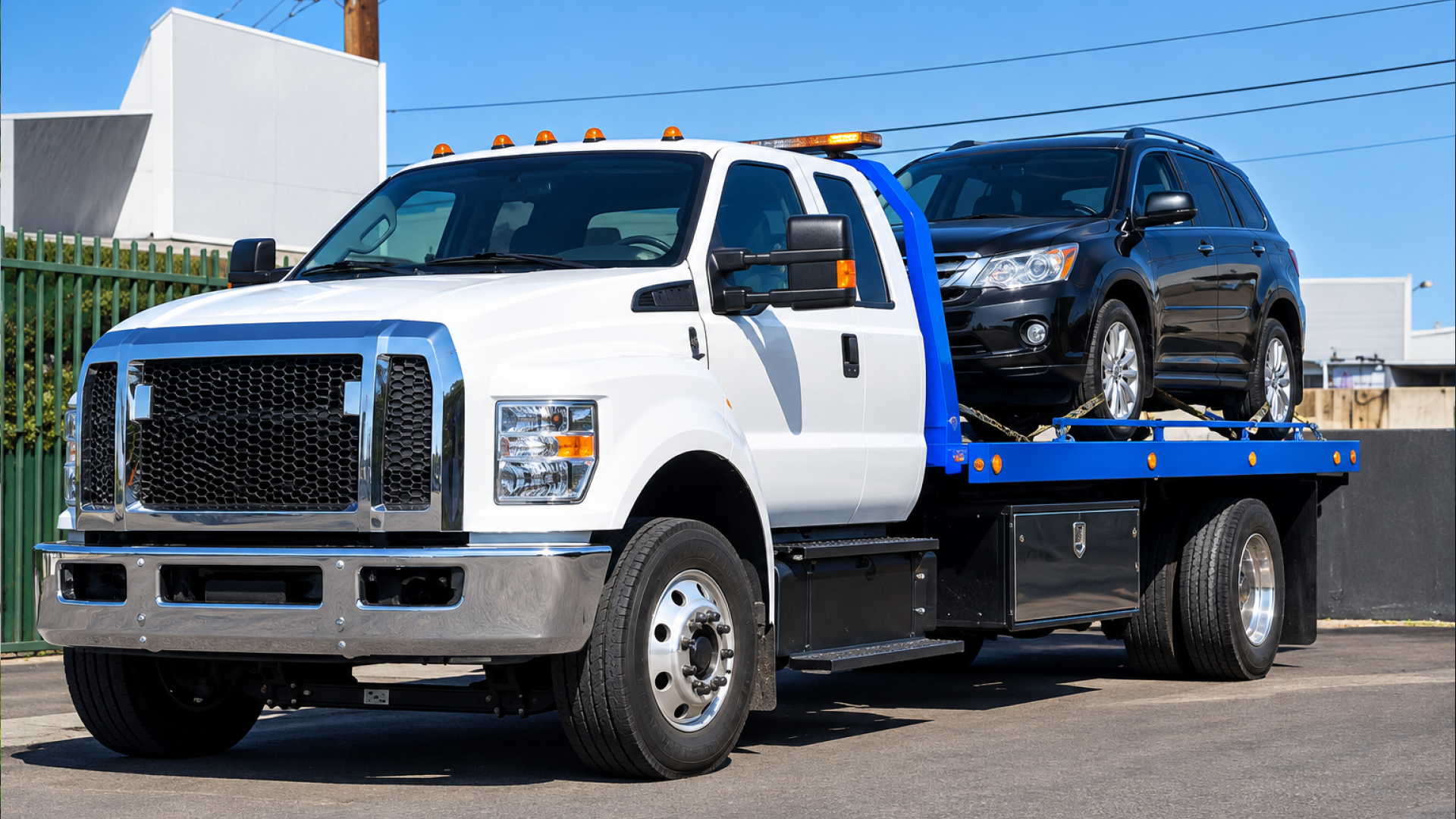
Flatbed Towing for Completely Disabled Vehicles
Flatbed towing is commonly used when a vehicle needs to be transported with all four wheels off the road.
The vehicle is positioned onto the flatbed using the truck's loading system or winch. Once properly positioned, the operator secures it according to the vehicle and equipment requirements.
Flatbed towing can be particularly useful for vehicles that:
Cannot be driven
Have significant accident damage
Have drivetrain problems
Require all-wheel transportation
Need additional protection during transport
Are specialty or high-value vehicles
Keeping the vehicle fully supported during transportation can be preferable when allowing its wheels to roll could create additional problems. Read more about what is flatbed towing and when is it the safest choice.
Wheel-Lift Towing
A wheel-lift tow truck raises part of the vehicle off the ground while the remaining wheels stay on the road.
This method can be appropriate for certain vehicles and towing situations, particularly when the vehicle can be safely moved using its drive wheels or when the circumstances do not require a full flatbed.
However, wheel-lift towing is not automatically suitable for every disabled vehicle. The operator needs to consider factors such as drivetrain configuration, wheel condition, steering, suspension damage, and manufacturer requirements.
What Happens During Accident Recovery?
Accident recovery requires additional care because the vehicle may have damage that is not immediately visible.
A car involved in a collision might have:
Bent suspension components
Damaged wheels or tires
Fluid leaks
Broken steering components
Damaged bumpers or body panels
Undercarriage damage
Electrical problems
Airbag deployment
Structural damage
The tow operator must consider both the vehicle and the surrounding scene. Check out our guide on accident recovery services explained.
Getting a Damaged Vehicle Ready for Towing
If the vehicle cannot roll normally, a winch may be used to move it onto a flatbed or into a position where it can be safely recovered.
The operator should work carefully around damaged wheels, body panels, suspension components, and other vulnerable areas.
A vehicle that has been involved in a serious collision should not be forced to move simply because it appears to be close to the roadway. Controlled recovery helps reduce the chance of additional damage. Review what to expect during a professional accident recovery service call.
Why You Should Not Drive an Accident-Damaged Vehicle
One of the most common mistakes after a collision is assuming that a vehicle is safe to drive because it still starts.
A damaged vehicle may have problems that are difficult to see from inside the cabin. Steering or braking problems can make driving especially dangerous. Even minor-looking exterior damage can sometimes hide mechanical or suspension issues.
If there is any reasonable concern about whether the vehicle is safe to operate, arranging professional accident recovery service is a safer choice than testing it on the road. Learn more about the signs you need professional towing instead of driving a damaged vehicle.
How Towing Companies Handle Vehicles With Locked or Damaged Wheels
A disabled vehicle may not roll normally. A damaged wheel can be stuck, turned at an unusual angle, or unable to support the vehicle.
This creates a different recovery challenge.
A tow operator may use a winch and specialized recovery equipment to reposition the vehicle. Depending on the circumstances, additional equipment may be needed to protect the wheels, tires, suspension, or surrounding property.
The operator also has to consider the surface underneath the vehicle. A car sitting on pavement is different from one stuck in mud, gravel, soft ground, or an uneven roadside area.
What If the Vehicle Cannot Steer?
Steering problems can make conventional towing unsafe because the vehicle may not track correctly as it is moved. Discover can a tow truck move a car with a locked steering wheel.
A flatbed may be a better option in situations where the vehicle needs to be completely supported rather than pulled along its wheels.
The correct approach depends on the specific vehicle and damage. A professional assessment helps determine which equipment is appropriate.
What If the Vehicle Is Stuck Rather Than Broken?
Not every undrivable vehicle has suffered a mechanical failure.
A car can become immobilized after sliding into mud, getting stuck in loose gravel, leaving the pavement, or becoming positioned in a location where it cannot safely exit.
Recovery is different from ordinary towing because the vehicle first has to be freed.
Vehicle Recovery With a Winch
A winch can provide controlled pulling power when a vehicle cannot move under its own power.
The operator must determine where to attach recovery equipment and how to pull the vehicle without creating unnecessary stress on the vehicle or surrounding objects.
The angle, terrain, vehicle weight, and location all matter. An improvised recovery attempt using an unsuitable rope, strap, or attachment point can damage the vehicle or create a dangerous situation.
For that reason, drivers should avoid experimenting with makeshift recovery methods on busy roads or difficult terrain.
How Towing Works on DFW Highways and Busy Roads
A disabled vehicle on a Dallas-Fort Worth highway presents additional safety concerns because of traffic speed, limited shoulder space, and changing road conditions.
If your vehicle becomes disabled:
Move to a safe location if the vehicle can still be moved without creating additional danger.
Turn on your hazard lights.
Remain in a safe position away from moving traffic when possible.
Contact roadside assistance or a towing company.
Tell the operator your exact location and direction of travel.
Explain whether the vehicle rolls, steers, and starts.
Mention any accident damage or visible hazards.
Follow the operator's instructions while waiting.
Do not stand in a traffic lane or attempt complicated roadside repairs in an unsafe location. Read what to do when your vehicle breaks down on a busy DFW road.
Providing accurate information during the initial call can also help the towing company send the right equipment.
What Information Should You Give the Tow Operator?
A detailed description can save time because the company can prepare for the vehicle before arriving.
Useful information includes:
Vehicle make, model, and approximate size
Exact location
Direction of travel
Whether the vehicle starts
Whether the wheels roll
Whether the steering works
Whether the vehicle was involved in an accident
Visible damage
Whether the vehicle is stuck
Desired destination
Any unusual circumstances at the scene
For example, saying "the car won't start" is helpful, but "the car won't start, the front driver's wheel is damaged, and the vehicle is parked partly on the shoulder" gives the operator much more useful information. Learn what information should you give a towing company when you call.
Common Mistakes to Avoid With an Undrivable Vehicle
Drivers often make decisions under pressure after a breakdown or accident. A few simple mistakes can make recovery more difficult.
Trying to Drive a Seriously Damaged Vehicle
If steering, braking, suspension, or wheel components are damaged, driving can create additional risk.
Choosing a Tow Method Based Only on Price
The cheapest towing method is not necessarily appropriate for every vehicle. The equipment must match the vehicle's condition.
Giving an Incomplete Location
On a large highway system, "I'm on the freeway" is not enough. Provide the road name, direction, nearby exit, landmark, or other identifying information.
Attempting an Improvised Recovery
Using another vehicle to pull a stuck or damaged car can result in equipment failure or additional vehicle damage.
Leaving Personal Items Behind
Before the vehicle is transported, remove valuables and essential belongings when it is safe and practical to do so. Read more on what to remove from your car before it is towed.
Flatbed vs. Wheel-Lift Towing: Which Is Better?
There is no universal answer because the correct method depends on the vehicle and situation.
Flatbed towing places the vehicle entirely on the tow truck. It can be especially useful for severely disabled vehicles, accident-damaged vehicles, specialty vehicles, and situations where keeping all wheels off the roadway is preferable. Learn about the benefits of choosing flatbed towing for accident-damaged vehicles.
Wheel-lift towing raises part of the vehicle while other wheels remain on the ground. It can work well for certain vehicles and towing situations where the vehicle's condition and drivetrain make this method appropriate.
The tow operator should evaluate the vehicle rather than choosing equipment based solely on convenience.
How Long Does It Take to Tow an Undrivable Vehicle?
There is no single towing time that applies to every disabled vehicle.
A straightforward pickup from a parking lot may be relatively simple. Accident recovery, a vehicle with locked wheels, a difficult roadside position, or a stuck vehicle can require more time.
Travel distance also affects the total process. A local tow within the DFW area is different from long-distance towing across Texas or to another state.
The most useful information to provide is the vehicle's exact condition and location. That allows the towing company to better understand what kind of recovery is involved.
What Happens After the Vehicle Is Loaded?
Once the vehicle is safely positioned on the tow truck, it must be secured for transportation.
The operator checks that the vehicle is properly supported and restrained before leaving the location. The destination may be a repair shop, body shop, dealership, residence, storage facility, or another authorized location.
For accident-damaged vehicles, the driver may also need to coordinate with an insurance company or collision repair facility.
If you are unsure where to take the vehicle, ask about your available options before the tow begins. Knowing the destination in advance can make the process easier.
Special Considerations for Motorcycles and Specialty Vehicles
Motorcycles, classic vehicles, luxury cars, recreational vehicles, and other specialty vehicles may require additional attention.
Their dimensions, weight distribution, ground clearance, bodywork, tires, and attachment points can differ considerably from ordinary passenger vehicles.
Motorcycle towing, for example, should be secured using equipment and techniques appropriate for two-wheeled vehicles. Learn how professional motorcycle towing protects your bike during transport. A specialty vehicle may also require careful loading because low ground clearance or custom bodywork can make ordinary loading procedures unsuitable. Consider show car hauling for valuable vehicles.
If your vehicle has unusual requirements, mention them when requesting the tow.
What Makes Professional Towing Different From Simply Moving a Car?
The main difference is controlled transportation.
An undrivable vehicle may have damaged components, unusual weight distribution, locked wheels, limited clearance, or other conditions that make casual movement risky.
Professional towing involves assessing those conditions, selecting suitable equipment, securing the vehicle, and transporting it to the requested location.
For a 24/7 towing and roadside assistance provider serving the DFW area, that process can cover much more than basic towing. Services may include accident recovery, flatbed towing, motorcycle towing, specialty vehicle transport, tire change service, emergency fuel delivery, and long-distance towing.
The right service depends on what happened to the vehicle and what it needs next.
Practical Takeaways for Drivers With an Undrivable Vehicle
If your vehicle cannot be driven, focus on safety first and give the towing company accurate information.
Remember these basic steps:
Get yourself and passengers to a safe location when possible.
Turn on hazard lights.
Avoid standing near moving traffic.
Do not drive a vehicle with questionable steering, brakes, wheels, or suspension.
Explain the vehicle's condition clearly when calling.
Tell the operator if the vehicle is involved in an accident.
Ask what type of towing equipment will be used if you have concerns.
Remove important personal belongings when safe. Review how to protect personal belongings during vehicle transport.
Confirm the destination before transportation.
Keep relevant insurance and vehicle information available. Check what documents may you need when having a vehicle towed.
These steps can help the recovery process move more smoothly while reducing unnecessary risk.
Conclusion
Towing an undrivable vehicle requires more than simply attaching a cable and pulling it away. The operator needs to understand why the vehicle cannot be driven, whether it can roll and steer, what damage it has sustained, where it is located, and what equipment is appropriate for the recovery.
Flatbed trucks, wheel-lift systems, winches, and other recovery equipment each have specific applications. Accident-damaged vehicles, stuck cars, vehicles with failed mechanical systems, motorcycles, and specialty vehicles may all require different approaches.
For drivers dealing with a breakdown or collision, the safest approach is to avoid forcing the vehicle to move and provide the towing company with as much accurate information as possible. A clear description helps the operator prepare for the situation before arriving.
When a vehicle cannot be driven, professional towing provides a controlled way to get it off the road and transport it to its next destination. If you have any additional questions, visit our towing FAQs or contact us directly.
Frequently Asked Questions
What Should I Do If My Car Breaks Down on a DFW Highway?
Turn on your hazard lights, move to a safe location if the vehicle can be moved safely, and contact roadside assistance or a towing company. Provide your highway, direction, nearby exit, and vehicle condition so the operator can locate you.
How Much Does a Tow Truck Cost in the Dallas-Fort Worth Area?
Towing prices vary based on factors such as distance, vehicle type, towing method, location, recovery difficulty, and time of service. Ask for pricing details before authorizing transportation so you understand the expected charges.
When Should You Choose Flatbed Towing for Your Vehicle?
Flatbed towing can be appropriate when a vehicle cannot be driven, has significant accident damage, has drivetrain problems, requires all wheels off the ground, or needs specialized transportation. The tow operator can determine the appropriate method based on its condition. Learn why flatbed towing is recommended for luxury and specialty vehicles.
What Should I Do After a Car Accident If My Vehicle Cannot Be Driven?
Move to a safe location if possible, contact emergency services when necessary, document the scene, and arrange professional towing. Avoid driving an accident-damaged vehicle if steering, braking, wheels, suspension, or other safety-related components may be compromised.
What Should I Do If My Car Won’t Start and I’m Stuck on the Road?
Turn on your hazard lights and get to a safe position away from traffic if possible. Contact roadside assistance and explain whether the vehicle has electrical symptoms, a dead battery, or another known problem. Learn about common reasons drivers need a jump start and how to avoid being stranded. A jump start or tow may be appropriate.
How Does 24/7 Emergency Towing Work in the DFW Area?
You contact a towing provider, explain your location and vehicle condition, and provide the destination if known. The operator determines what type of assistance or towing equipment is needed and responds based on the circumstances. Read what drivers should know about 24/7 towing services.
What Is the Difference Between Flatbed Towing and Wheel-Lift Towing?
A flatbed carries the entire vehicle on a raised platform, while wheel-lift towing raises part of the vehicle and leaves other wheels on the road. The appropriate method depends on the vehicle, drivetrain, damage, and towing conditions.
Can a Towing Company Safely Transport a Motorcycle or Specialty Vehicle?
Yes, specialized towing services can transport motorcycles and specialty vehicles when appropriate equipment and securing methods are used. Tell the towing company about the vehicle type, dimensions, condition, and any special requirements before pickup.
What Should I Do If I Get a Flat Tire on a Dallas-Fort Worth Road?
If it is safe, move the vehicle away from active traffic and turn on the hazard lights. You can request roadside assistance for a tire change or towing if the tire cannot be safely replaced or the vehicle has additional damage. Check how professional tire change services improve roadside safety.
How Does Long-Distance Towing Work, and How Much Does It Cost?
Long-distance towing involves transporting the vehicle beyond a typical local service area. Pricing depends on factors such as mileage, vehicle type, pickup and destination locations, towing equipment, and the condition of the vehicle. Confirm the details before transportation. Review long-distance vehicle transport key questions drivers often ask.
