

What Drivers Should Know About 24/7 Towing Services
Introduction
A vehicle breakdown rarely happens at a convenient time. A dead battery can leave you stranded before work, a flat tire can happen late at night, and an accident can leave a vehicle disabled on a busy Dallas-Fort Worth roadway. In each situation, knowing how 24/7 towing services work can help you make safer decisions and avoid unnecessary delays.
Infront Towing provides towing and roadside assistance around the clock, including nights, weekends, holidays, and other times when a traditional repair shop may be closed. Depending on the situation, help may include a tow, jump start, tire change, fuel delivery, vehicle recovery, or transportation to a repair facility or another destination.
For DFW drivers, understanding the different types of towing, what information to provide when requesting help, how pricing may work, and what to do while waiting can make an unexpected roadside problem much easier to manage. Read more about how to choose a towing company in the dfw metroplex for additional insights.
What Does 24/7 Towing Service Mean?
A 24/7 towing service is a towing and roadside assistance operation that accepts service requests at any hour of the day or night. The purpose is to provide assistance when a vehicle cannot safely continue driving or when a driver needs emergency roadside support.
24/7 service does not necessarily mean every type of tow truck or specialty service is available at every location at every moment. The appropriate equipment depends on the vehicle, its condition, location, and the type of assistance required.
What Services Are Typically Available?
Depending on the towing company and situation, 24/7 roadside assistance may include:
Emergency towing
Wheel-lift towing
Vehicle recovery
Some problems can be resolved at the roadside. Others require the vehicle to be transported to a mechanic, dealership, body shop, home, storage facility, or another appropriate destination. Learn more about emergency roadside situations that often require professional towing assistance.
Why 24/7 Availability Matters
A breakdown at 2 p.m. can be inconvenient. A breakdown at 2 a.m. can create additional safety concerns, especially if the vehicle is stopped near moving traffic or in an unfamiliar area.
Round-the-clock towing gives drivers an option for obtaining assistance outside normal business hours. It can be particularly useful after collisions, during overnight travel, or when a vehicle becomes disabled far from home.
When Should You Call a 24/7 Towing Service?
Not every roadside problem requires a tow truck. Sometimes a simple roadside service can get the vehicle moving again. In other cases, continuing to drive can cause additional damage or create a safety risk.
Your Vehicle Will Not Start
A vehicle that will not start may have a dead battery, starter problem, electrical issue, fuel problem, or another mechanical fault. If a jump start does not solve the problem, towing may be necessary.
Avoid repeatedly attempting to start a vehicle when there are signs of a serious mechanical or electrical problem. A professional can determine whether roadside assistance is appropriate or whether the vehicle should be transported. Check out this guide on dead battery on the road a complete guide to jump start services.
Your Vehicle Is Unsafe to Drive
A vehicle can sometimes move under its own power but still be unsafe to operate. Examples include severe tire damage, steering problems, major fluid leaks, significant collision damage, or warning signs of a serious mechanical failure.
Driving a compromised vehicle to a repair shop may increase the risk of further damage. In these situations, towing is often a safer option. Review signs you need professional towing instead of driving a damaged vehicle.
Your Vehicle Is Involved in an Accident
After a collision, a vehicle may have hidden damage even if it appears capable of moving. Damaged wheels, suspension components, steering systems, body panels, or fluid systems can affect safe operation.
If the vehicle cannot be driven safely, accident recovery and towing can transport it away from the roadway and to an appropriate destination.
How Does a 24/7 Towing Call Work?
Knowing what happens after you request assistance can make the process less stressful.
Step 1: Provide Your Exact Location
Tell the towing company where the vehicle is located. If you are on a highway, provide the road name, direction of travel, nearest exit, mile marker, cross street, or recognizable landmark when possible.
A precise location helps the operator understand where the truck needs to go.
Step 2: Explain the Vehicle Problem
Describe what happened rather than simply saying that the vehicle is broken. For example, explain whether:
The engine will not start
The vehicle was involved in an accident
A tire is flat
The battery appears dead
The vehicle ran out of fuel
The vehicle is stuck
The vehicle can move but should not be driven
This information helps the towing provider determine what type of assistance may be appropriate. Read more about what information should you give a towing company when you call.
Step 3: Give Vehicle Details
Be ready to provide the vehicle's make, model, approximate year, color, and condition. If it is a motorcycle, specialty vehicle, or unusually large vehicle, mention that before the truck is dispatched.
Vehicle details can affect the equipment required for safe transportation.
Step 4: Confirm the Destination
If towing is required, tell the provider where you want the vehicle taken. This could be a repair shop, dealership, residence, body shop, or another location.
If you do not yet know the destination, ask what options are available before the tow begins.
Choosing the Right Type of Tow Truck
The right towing method depends on the vehicle and circumstances. A tow truck should not be selected solely because it is available first.
Flatbed Towing
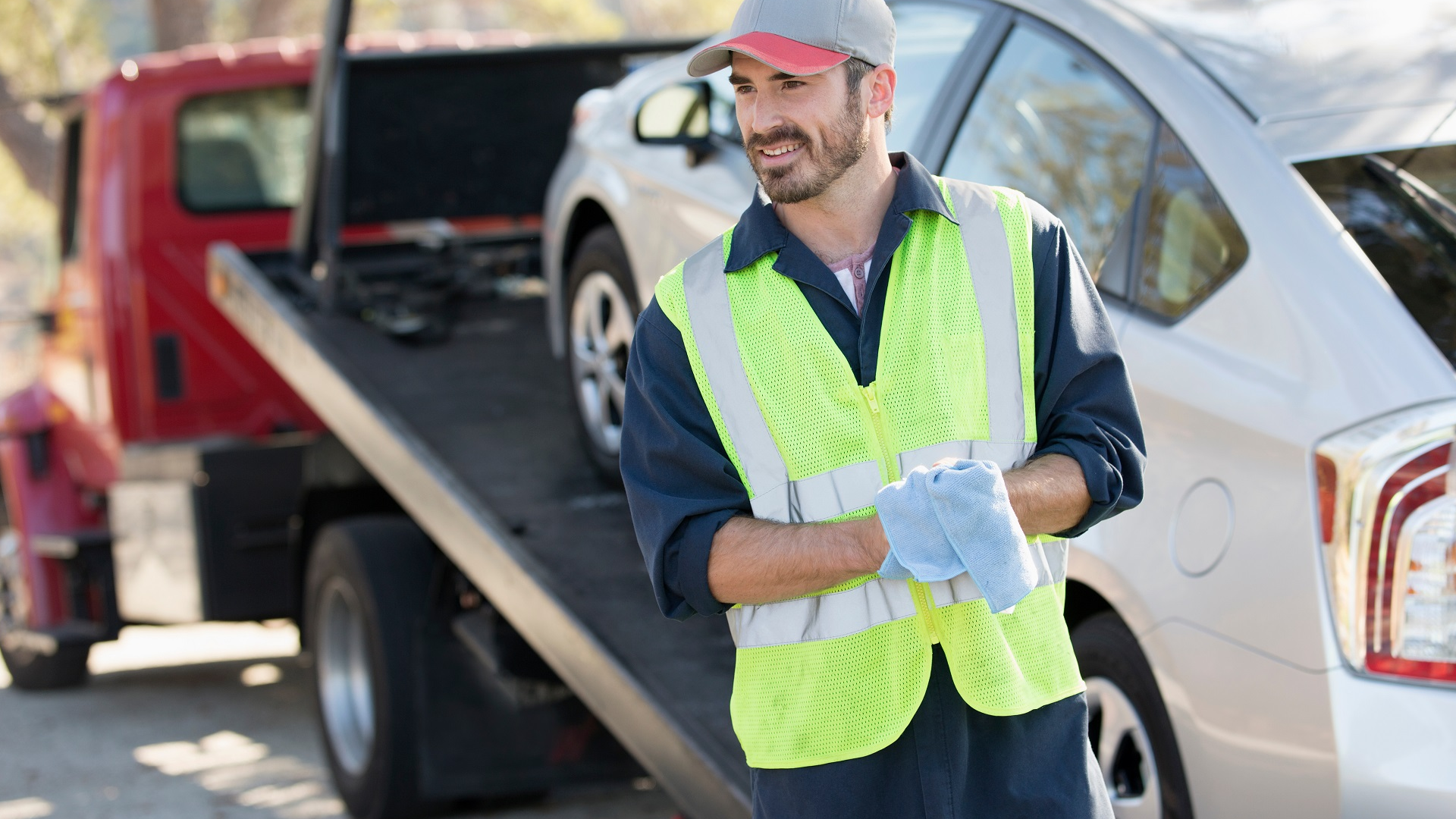
With flatbed towing, the vehicle is loaded onto a flat platform rather than being pulled with two wheels remaining on the road.
Flatbed towing can be useful for vehicles that need all four wheels off the ground, vehicles with certain types of damage, motorcycles, specialty vehicles, and situations where limiting wheel contact with the road is desirable. Explore how flatbed towing helps reduce vehicle wear during transportation.
Wheel-Lift Towing
Wheel-lift towing raises one end of the vehicle while the other end remains on the roadway. This method can be appropriate for certain standard towing situations.
The suitability of wheel-lift towing depends on the vehicle's drivetrain, condition, location, and manufacturer's requirements.
Specialty Vehicle Transport
Motorcycles, luxury vehicles, modified vehicles, recreational vehicles, and other specialty vehicles may require additional care or specific equipment.
Before requesting service, explain what makes the vehicle different from a standard passenger car. This allows the towing provider to plan for the appropriate transportation method.
What Should Drivers Do While Waiting for a Tow Truck?
Your safety should remain the priority after a breakdown or collision.
Move to a Safer Location If Possible
If the vehicle can be moved safely, get as far away from active traffic as practical. On a highway, remaining inside a disabled vehicle near fast-moving traffic can present significant danger.
If the vehicle cannot be moved, turn on the hazard lights and remain in the safest available position.
Be Careful When Exiting the Vehicle
Do not step into active traffic simply because you are waiting for assistance. Roadside conditions can change quickly, particularly on highways and during poor visibility.
If you must exit, assess traffic carefully and use the safest available route away from moving vehicles.
Share Useful Location Information
If you are on a large roadway, periodically confirm your surroundings. Exit numbers, road signs, nearby businesses, mile markers, and recognizable landmarks can help the towing operator locate you.
A vehicle's hazard lights can also make it easier to identify, especially at night.
How Much Does 24/7 Towing Cost?
There is no single price for every towing situation. The final cost can depend on factors such as the type of service, distance, vehicle type, location, equipment requirements, and destination.
A simple local tow may have different pricing from accident recovery, specialty transport, or long-distance towing.
Questions to Ask About Towing Costs
Before authorizing service, ask what is included in the quoted price and whether additional charges may apply. Useful questions include:
What is the estimated towing or service charge?
Is mileage included?
Are there additional fees for specialized equipment?
Does the price change for after-hours service?
What destination distance is included?
Are there storage or other third-party charges I should know about?
Clear communication about pricing can reduce misunderstandings after the service is completed.
Common Misconceptions About 24/7 Towing
Several assumptions about emergency towing can cause confusion.
Myth: Every Breakdown Requires a Tow. Not necessarily. A dead battery may only require a jump start. A flat tire may only require tire assistance. Running out of fuel may require fuel delivery.
Myth: A Vehicle That Starts Is Always Safe to Drive. A vehicle may start while still having a serious problem. Collision damage, steering problems, tire damage, overheating, or fluid leaks can make driving unsafe.
Myth: Any Tow Truck Can Handle Any Vehicle. Different vehicles and situations can require different equipment. A motorcycle, damaged vehicle, specialty vehicle, and standard passenger car may not be handled in exactly the same way.
How to Prepare for a Towing Emergency
You cannot always prevent a breakdown, but you can prepare for one.
Keep Important Information Accessible
Store your insurance information, roadside assistance details, vehicle registration, emergency contacts, and preferred repair shop information where they can be accessed quickly.
A phone charger or power bank can also be useful if you become stranded away from home.
Know Your Vehicle
Understand where your hazard-light controls, spare tire, jack, emergency equipment, and fuel door are located. If your vehicle uses a tire repair kit instead of a spare, know where the kit is stored.
Review your owner's manual for towing-related instructions and manufacturer-specific requirements.
Maintain Basic Roadside Supplies
A practical emergency kit may include:
Flashlight
Reflective safety equipment
Phone charger
Basic first-aid supplies
Drinking water
Work gloves
Vehicle documentation
24/7 Towing After a Breakdown on a DFW Highway
Dallas-Fort Worth includes major highways, busy interchanges, frontage roads, suburban streets, and long stretches between destinations. A disabled vehicle can become especially stressful when traffic is heavy or visibility is limited.
If your car stops working on a DFW highway, first focus on getting yourself and your passengers to a safer position. Turn on hazard lights, assess whether the vehicle can be moved without creating additional danger, and contact appropriate assistance. Read more about what to do when your vehicle breaks down on a busy dfw road.
Accident Recovery and Towing
Accident scenes require more than simply connecting a vehicle to a tow truck.
A collision can leave wheels misaligned, suspension components damaged, tires compromised, or body panels interfering with normal vehicle movement. A professional towing operator needs to consider the vehicle's condition before loading and transporting it. Learn more via accident recovery vs standard towing understanding the difference.
Long-Distance Towing and Vehicle Transport
Local towing is not the only reason someone may need professional vehicle transportation. A vehicle may need to travel between cities, move to a specialized repair facility, or be transported to a new location.
Long-distance towing typically requires planning around the vehicle's condition, pickup location, destination, equipment, and total distance. Read more about long-distance towing vs local towing which service do you need.
Best Practices for Working With a Towing Company
Good communication benefits both the driver and the towing operator. Provide accurate information from the beginning. If the vehicle is stuck in mud, has damaged wheels, carries unusual equipment, or requires specialty handling, mention it before dispatch.
Ask questions if you are unsure about the towing method or destination. A professional towing interaction should involve clear communication about the service being provided and the vehicle's transportation needs.
What Drivers Should Remember About 24/7 Towing
A roadside emergency becomes easier to manage when you know what information matters and what choices you have. Remember these key points:
24/7 towing provides access to assistance outside normal business hours.
Not every roadside problem requires a tow.
Describe the vehicle's condition accurately before requesting service.
Flatbed and wheel-lift towing serve different purposes.
Accident-damaged vehicles may require specialized recovery.
Ask about pricing, mileage, equipment, and destination charges.
Stay in the safest available location while waiting.
Conclusion
A 24/7 towing service can be an important resource when a vehicle breaks down, becomes unsafe to drive, or is damaged in an accident. Understanding how emergency towing works helps drivers communicate clearly, choose appropriate assistance, and make safer decisions while waiting for help.
Frequently Asked Questions
What Should I Do If My Car Breaks Down on a DFW Highway?
Turn on your hazard lights and, if it is safe to do so, move the vehicle away from active traffic. Contact roadside assistance or a towing company and provide the highway, direction, nearest exit, mile marker, and other location details.
How Much Does a Tow Truck Cost in the Dallas-Fort Worth Area?
Towing prices vary based on the service, distance, vehicle, location, equipment, and destination. Ask for an estimate and clarify mileage, specialized equipment, after-hours charges, and other potential fees before authorizing service.
When Should You Choose Flatbed Towing for Your Vehicle?
Flatbed towing may be appropriate when a vehicle needs all four wheels off the roadway, including certain damaged vehicles, motorcycles, specialty vehicles, and situations where flatbed transportation is recommended for the vehicle's condition.
What Should I Do After a Car Accident If My Vehicle Cannot Be Driven?
Prioritize personal safety and contact emergency services when necessary. If the vehicle cannot be safely driven, arrange accident recovery or towing and provide information about the vehicle's location, damage, and preferred destination.
What Should I Do If My Car Won’t Start and I’m Stuck on the Road?
Turn on your hazard lights and move to a safe location if possible. A jump start may solve a dead-battery problem, but if the vehicle still will not start or has another mechanical issue, towing may be necessary.
How Does 24/7 Emergency Towing Work in the DFW Area?
You contact a towing provider, provide your location and vehicle information, describe the problem, and explain where the vehicle needs to go if towing is required. The provider can determine what type of roadside assistance or towing equipment may be appropriate.
What Is the Difference Between Flatbed Towing and Wheel-Lift Towing?
Flatbed towing places the vehicle on a platform so the wheels are off the road. Wheel-lift towing raises one end of the vehicle while the other end remains on the roadway. The appropriate method depends on the vehicle and situation.
Can a Towing Company Safely Transport a Motorcycle or Specialty Vehicle?
Yes, specialty vehicles can be transported by towing providers equipped for those vehicles. Because motorcycles and specialty vehicles can have different loading and securing requirements, provide accurate vehicle details when requesting service.
What Should I Do If I Get a Flat Tire on a Dallas-Fort Worth Road?
Turn on your hazard lights and move away from traffic if you can do so safely. If changing the tire is not practical or safe, contact roadside assistance for tire service or towing.
How Does Long-Distance Towing Work, and How Much Does It Cost?
Long-distance towing transports a vehicle beyond a typical local towing distance. Cost depends on factors such as total mileage, vehicle type, pickup and destination locations, equipment, and transportation requirements. Request clear pricing and service details before proceeding.
