

How to Choose the Right Tow Truck for Your Vehicle
Introduction
A tow truck is not a one-size-fits-all service. The right equipment depends on the vehicle, its condition, the reason it needs to be moved, and the distance it needs to travel. Choosing the wrong towing method can create unnecessary risks, especially if the vehicle has damaged wheels, a low clearance, an all-wheel-drive system, or other features that require careful handling.
For drivers in the Dallas-Fort Worth area, knowing the differences between tow trucks can make an already stressful roadside situation easier to manage. A vehicle that simply will not start may need a different solution from a car involved in an accident, a motorcycle that needs transport, or a specialty vehicle that cannot safely be moved with standard equipment.
This guide explains the main types of tow trucks, how to match towing equipment to your vehicle, what information to give the towing company, and what to consider before your vehicle is loaded.
Why Choosing the Right Tow Truck Matters
The towing method should match the vehicle and its condition. A professional towing company needs to consider factors such as vehicle size, weight, drivetrain, ground clearance, wheel condition, steering, and whether the vehicle can roll normally.
A basic roadside problem does not always require a full tow. If the vehicle simply has a dead battery, a jump start may solve the problem. A flat tire may call for roadside tire change service rather than transportation.
If the vehicle must be moved, the equipment becomes more important. You can also read more about this in our guide on choosing the right towing service based on your vehicle and situation.
Vehicle Condition Affects the Towing Method
A normally functioning vehicle that can roll, steer, and brake may be easier to tow than one with accident damage.
For example, a car with a damaged front suspension may not be suitable for the same towing method as a vehicle with four functioning wheels. A vehicle with locked wheels or significant undercarriage damage may require additional equipment or a flatbed towing service.
Before dispatching a truck, provide an accurate description of the vehicle's condition. Mention anything that could affect loading or movement.
Your Vehicle Type Also Matters
Different vehicles have different towing considerations. Common examples include:
Sedans and compact cars
SUVs and crossovers
Pickup trucks
Electric and hybrid vehicles
All-wheel-drive and four-wheel-drive vehicles
Vehicles with very low ground clearance
The vehicle's owner's manual may also contain specific towing instructions. If you are unsure, tell the towing provider the make, model, and year before the truck arrives.
Common Types of Tow Trucks
Understanding the basic equipment makes it easier to discuss your situation with a towing company.
Flatbed Tow Trucks
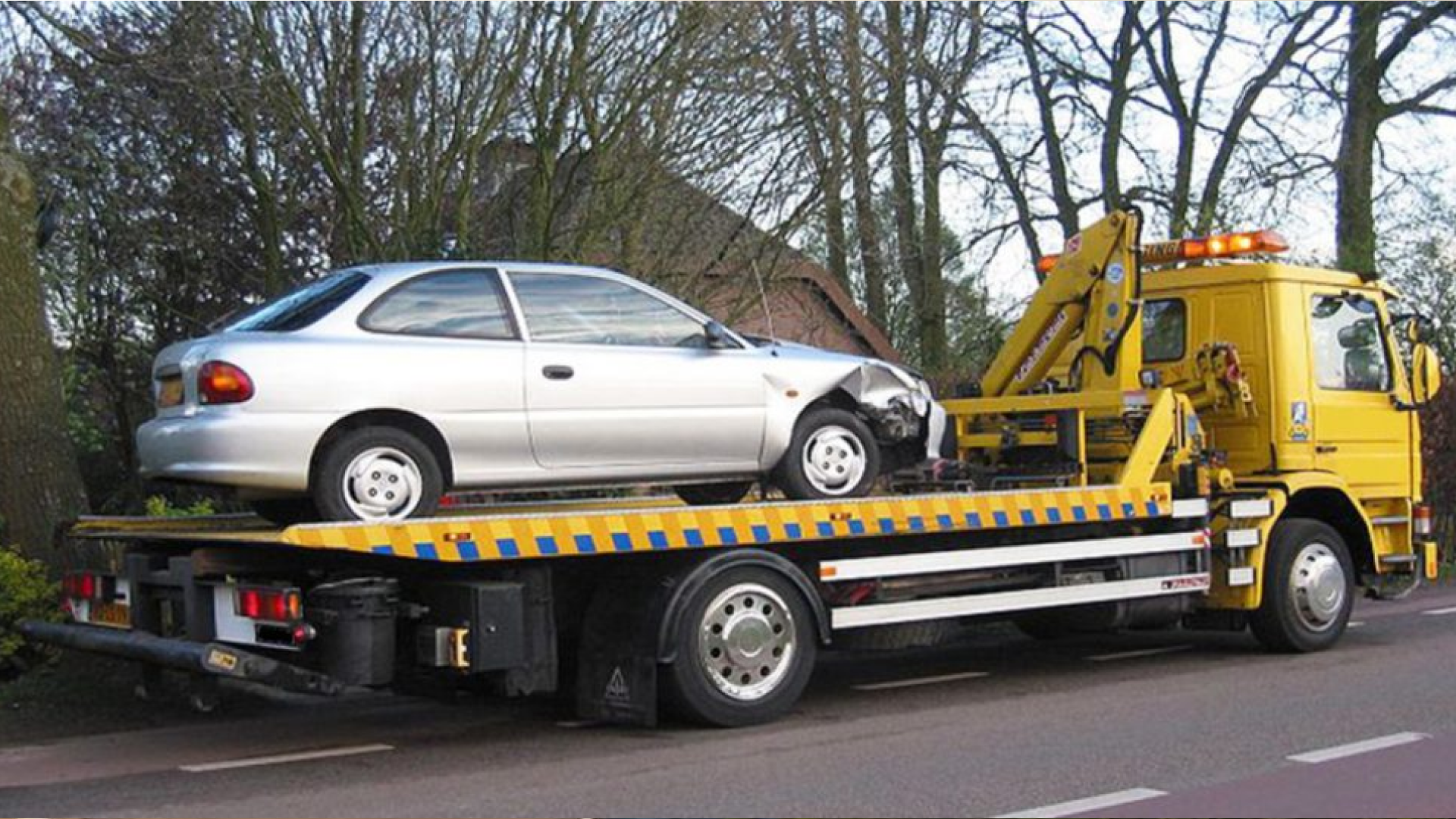
A flatbed tow truck has a long, level platform that can be lowered to create a loading angle. The vehicle is then positioned on the platform and secured for transportation.
Flatbed towing is commonly considered when the vehicle needs all four wheels off the road. It can be useful for vehicles that should not be dragged along their wheels, vehicles with certain drivetrain configurations, accident-damaged vehicles, and vehicles that need additional protection during transport.
Flatbeds are also frequently used for motorcycles and specialty vehicles when the proper loading and securing equipment is available.
When Flatbed Towing May Be Appropriate
A flatbed may be worth requesting when:
The vehicle has significant accident damage.
One or more wheels cannot roll normally.
The vehicle has low ground clearance.
The vehicle requires all wheels to be off the ground.
The vehicle is an AWD or certain 4WD configuration where another towing method may not be appropriate.
You are transporting a specialty vehicle and want the vehicle fully supported.
The manufacturer specifies a particular transportation method.
The exact method should still be confirmed based on the vehicle and its condition.
Wheel-Lift Tow Trucks
A wheel-lift truck uses a metal yoke to lift either the front or rear wheels while the other wheels remain on the road.
This method can be practical for many standard towing situations, particularly when the vehicle can roll and steer properly and the towing setup is compatible with the vehicle.
Wheel-lift towing can also be useful when access is limited. A smaller or more maneuverable truck may be able to reach locations where loading a large flatbed would be difficult.
When Wheel-Lift Towing May Work
A wheel-lift tow can be appropriate when:
The vehicle is in relatively stable condition.
The wheels and steering allow it to be moved safely.
The towing method is compatible with the drivetrain.
Road and access conditions allow proper loading.
The vehicle manufacturer does not prohibit that method.
The towing professional should determine how the vehicle is secured and whether additional equipment is necessary.
Heavy-Duty Tow Trucks
Heavy-duty towing equipment is designed for vehicles that are significantly larger or heavier than ordinary passenger vehicles.
Examples can include certain commercial trucks, buses, large vehicles, and other heavy equipment. These vehicles require appropriate capacity and specialized recovery equipment.
A standard light-duty tow truck should not automatically be assumed to have the capacity or equipment required for a heavy vehicle.
How to Match the Tow Truck to Your Vehicle
The easiest way to select the right equipment is to work through a few basic questions.
Step 1: Identify the Vehicle
Give the towing company the:
Year
Make
Model
Vehicle type
Approximate size or weight if known
For example, saying "2022 AWD SUV" provides much more useful information than simply saying "my car."
Step 2: Explain What Happened
Tell the dispatcher why the vehicle needs help.
Possible situations include:
Engine failure
Dead battery
Flat tire
Accident
Overheating
Mechanical failure
Vehicle stuck in mud
Vehicle stuck off-road
Locked or damaged wheels
Vehicle that will not shift into neutral
The reason for the tow can affect the equipment needed.
Step 3: Describe What the Vehicle Can Still Do
This is one of the most useful details to provide.
Can the vehicle:
Start?
Roll?
Steer?
Brake?
Shift into neutral?
Move under its own power?
Roll onto a flatbed?
If the answer is no to one or more of these questions, explain exactly what is not working.
Step 4: Mention Damage
After an accident, describe visible damage before the tow truck arrives.
Tell the provider if:
A wheel is bent or separated.
A tire is damaged.
The steering does not work.
The suspension is damaged.
The vehicle is leaking fluids.
The vehicle cannot roll.
Body panels are hanging or obstructing movement.
Photos can also help a towing company understand the situation before dispatch.
Step 5: Explain Where the Vehicle Is
Location affects the recovery process. A vehicle parked in a driveway is different from one stopped on a busy highway shoulder.
Provide useful location details such as:
Road or highway name
Direction of travel
Nearest exit
Mile marker, if available
Parking lot or business name
Nearby landmarks
Whether the vehicle is blocking traffic
For a roadside emergency, remain in a safe location whenever possible rather than standing beside moving traffic.
Flatbed vs. Wheel-Lift Towing
The difference between flatbed and wheel-lift towing is straightforward.
With a flatbed, the vehicle is loaded onto the truck's platform and transported with all four wheels supported by the bed.
With a wheel-lift, one end of the vehicle is lifted while the other end remains on the road.
Neither method is automatically right for every vehicle. The correct choice depends on the vehicle, drivetrain, damage, accessibility, manufacturer instructions, and towing conditions.
This comparison is a starting point rather than a substitute for professional assessment.
Special Considerations for AWD, 4WD, and Electric Vehicles
Certain vehicles require extra attention because their drivetrain or design can affect towing requirements.
All-Wheel-Drive and Four-Wheel-Drive Vehicles
Some AWD and 4WD vehicles have specific requirements for towing. Improper movement can potentially cause drivetrain problems.
If your vehicle has AWD or 4WD, tell the towing company before the truck is dispatched. If you have access to the owner's manual, check the manufacturer's towing instructions.
Electric and Hybrid Vehicles
Electric and hybrid vehicles can have different towing requirements from conventional gasoline-powered vehicles. You can learn more about this in our article on why EV owners should know their vehicles' towing requirements.
Do not assume that because the vehicle has four wheels, it can simply be pulled with any tow truck. The towing provider should know that the vehicle is electric or hybrid and determine the appropriate procedure.
The vehicle's manufacturer instructions should be followed whenever applicable.
Low-Clearance and Modified Vehicles
Sports cars, lowered vehicles, and modified vehicles may require additional care during loading.
A steep loading angle can create clearance problems. A towing professional may need to use appropriate equipment or positioning techniques to prevent contact between the vehicle and the loading surface.
Tell the dispatcher about modifications before the truck arrives.
Choosing a Tow Truck After an Accident
Accident recovery can be more complicated than a standard breakdown tow.
A vehicle may appear driveable but have hidden damage affecting the steering, suspension, wheels, or other components. Driving it away from the accident scene may create additional risk. For expert assistance, you can utilize our accident recovery service.
What to Tell the Towing Company
Explain:
Where the collision occurred.
Whether the vehicle starts.
Whether it can roll.
Whether the wheels are damaged.
Whether the steering works.
Whether airbags deployed.
Whether the vehicle is blocking traffic.
Where you want the vehicle transported.
If the vehicle cannot be safely driven, professional recovery equipment may be needed rather than a simple roadside tow.
What If Your Vehicle Is Stuck?
A vehicle stuck in mud, soft ground, snow, a ditch, or another difficult location may require recovery rather than ordinary towing.
Recovery can involve additional equipment and careful positioning. Pulling a vehicle without considering its surroundings can damage the vehicle or create a dangerous situation.
Give the Dispatcher a Detailed Description
Explain whether the vehicle is:
Completely immobilized
Partially stuck
Off the paved roadway
In mud or soft soil
In a ditch
On uneven terrain
Facing uphill or downhill
Also mention nearby obstacles such as fences, trees, poles, parked vehicles, or narrow access points.
The more accurate the information, the easier it is to determine what type of recovery equipment may be required.
How Much Does a Tow Truck Cost?
There is no single towing price that applies to every situation.
The total cost can depend on factors such as:
Distance
Vehicle type
Tow truck type
Time of service
Location
Roadside conditions
Recovery complexity
Additional roadside services
Destination
A straightforward local tow may involve different equipment and labor from an accident recovery or long-distance towing.
Before service begins, ask about the expected charges and whether additional fees may apply. You can also view our towing FAQs for more insights.
Questions to Ask Before the Tow Begins
A few simple questions can prevent misunderstandings.
Ask:
What type of tow truck is being sent?
Is the truck appropriate for my vehicle?
How will the vehicle be secured?
Is the quoted price for the complete service?
Are there additional charges for difficult recovery?
Where will the vehicle be taken?
Do I need to provide the keys?
Is there anything I should remove from the vehicle?
If the vehicle has special requirements, communicate them before loading begins.
Common Tow Truck Mistakes to Avoid
Choosing towing equipment based only on convenience can cause problems.
Assuming Every Tow Truck Can Tow Every Vehicle
Different trucks have different capacities and equipment. A passenger vehicle, motorcycle, commercial vehicle, and specialty vehicle may require very different towing arrangements.
Not Mentioning Vehicle Damage
A dispatcher cannot account for damage that has not been reported. Always mention locked wheels, suspension damage, flat tires, accident damage, or other conditions that could affect loading.
Ignoring Manufacturer Towing Instructions
Your owner's manual may specify how the vehicle should be transported. This can be especially relevant for AWD, 4WD, electric, hybrid, and specialty vehicles.
Choosing Based Only on the Cheapest Quote
Price matters, but equipment compatibility matters too. Ask what equipment is included and whether the quoted service matches the actual recovery situation.
A Practical Tow Truck Selection Checklist
Before calling for a tow, collect the following information:
Vehicle year, make, and model
Vehicle type
Drivetrain, if known
Exact location
Destination
Reason for the tow
Whether the vehicle starts
Whether it rolls
Whether it steers
Whether it can shift into neutral
Visible damage
Any special modifications
Whether the vehicle is AWD, 4WD, electric, or hybrid
This information helps the towing company determine what equipment may be appropriate before dispatch. You can also learn more about what information should you give a towing company when you call.
Conclusion
Choosing the right tow truck starts with understanding the vehicle and its condition. A standard wheel-lift truck may be suitable for some routine towing situations, while a flatbed may be more appropriate for certain damaged, low-clearance, AWD, specialty, or otherwise sensitive vehicles. Heavy vehicles and difficult recoveries can require specialized equipment.
The safest approach is to give the towing company accurate information before the truck arrives. Explain what happened, describe the vehicle's condition, mention drivetrain or vehicle-specific requirements, and provide clear location details.
For drivers dealing with a breakdown, accident, flat tire, dead battery, or vehicle recovery situation in the Dallas-Fort Worth area, Infront Towing provides 24/7 towing and roadside assistance, including flatbed towing, accident recovery, motorcycle towing, specialty vehicle transport, jump starts, tire changes, emergency fuel delivery, and long-distance towing. You can also contact us or learn more about us to experience reliable service whenever you need it.
Frequently Asked Questions
What Should I Do If My Car Breaks Down on a DFW Highway?
Move to a safe location away from traffic if possible, turn on your hazard lights, and contact roadside assistance or emergency services if necessary. Give the towing provider the highway, direction, nearest exit, and vehicle condition.
How Much Does a Tow Truck Cost in the Dallas-Fort Worth Area?
Towing prices vary according to distance, vehicle type, equipment, location, recovery difficulty, time of service, and additional roadside assistance. Ask for pricing details before service begins and clarify whether extra charges may apply.
When Should You Choose Flatbed Towing for Your Vehicle?
Flatbed towing may be appropriate when a vehicle needs all four wheels supported, has certain drivetrain requirements, has accident damage, has low clearance, or is a specialty vehicle. The towing provider should confirm the appropriate method for the specific vehicle.
What Should I Do After a Car Accident If My Vehicle Cannot Be Driven?
Move to a safe location if possible and contact the appropriate emergency services. If the vehicle cannot be safely driven, provide the towing company with details about wheel, steering, suspension, or body damage so the recovery equipment can be selected appropriately.
What Should I Do If My Car Won’t Start and I’m Stuck on the Road?
Turn on your hazard lights and move away from traffic when it is safe to do so. Depending on the cause, you may need a jump start, roadside assistance, or a tow. Describe the vehicle's symptoms when requesting help.
How Does 24/7 Emergency Towing Work in the DFW Area?
You contact a towing provider, give your location and vehicle details, explain the problem, and identify the destination if the vehicle needs transportation. The provider can then determine what type of roadside assistance or towing equipment may be appropriate.
What Is the Difference Between Flatbed Towing and Wheel-Lift Towing?
A flatbed carries the vehicle entirely on a level platform, keeping all four wheels off the road. A wheel-lift raises one end of the vehicle while the other end remains on the road. The appropriate method depends on the vehicle and towing circumstances.
Can a Towing Company Safely Transport a Motorcycle or Specialty Vehicle?
Yes, motorcycles and specialty vehicles can be transported with suitable equipment and proper securing procedures. Tell the towing provider what type of vehicle you have and mention any special handling requirements before dispatch.
What Should I Do If I Get a Flat Tire on a Dallas-Fort Worth Road?
If possible, move the vehicle to a safe location away from moving traffic and turn on the hazard lights. You may be able to receive roadside tire-changing assistance, or the vehicle may need to be towed if the tire or wheel cannot be safely serviced at the roadside.
How Does Long-Distance Towing Work, and How Much Does It Cost?
Long-distance towing involves transporting a vehicle from one location to another over an extended distance. Pricing can depend on mileage, vehicle type, equipment, route, destination, and other service requirements. Request a detailed quote before transportation begins.
