

What Makes Towing a Lowered Vehicle More Challenging?
Introduction
Lowered vehicles have a distinctive appearance and handling feel, but that reduced ride height can create real challenges when the vehicle needs to be towed. A car with a lowered suspension may have less clearance between its underbody and the road, making ordinary towing equipment and loading angles more difficult to manage.
The problem becomes more noticeable after a breakdown, accident, flat tire, or mechanical failure. A vehicle that normally drives without trouble can be surprisingly difficult to load onto a tow truck without contacting the bumper, side skirts, exhaust components, suspension parts, or other low-mounted equipment.
That does not mean a lowered vehicle cannot be transported safely. It means the towing method, equipment, loading technique, and vehicle condition need to be considered before the vehicle is moved.
For lowered cars, sports cars, modified vehicles, and other low-clearance vehicles, understanding the towing process can help prevent avoidable damage and make roadside assistance more efficient through professional Infront Towing services.
Why Is Towing a Lowered Vehicle More Difficult?
The primary challenge is ground clearance. A lowered vehicle sits closer to the road, so the angle between the vehicle and the tow truck's loading surface becomes more important.
A standard vehicle may have enough clearance to travel up a loading ramp without its front bumper touching the ramp. A lowered car may not.
Several factors can make the situation more complicated:
Reduced front and rear bumper clearance
Low side skirts or aerodynamic body kits
Modified suspension systems
Large or extended exhaust components
Low-mounted engine or transmission parts
Short front overhangs or aggressive bumper designs
Damaged suspension after an accident
Uneven roads, driveways, parking lots, or shoulders
Steep tow truck loading angles
The towing professional must account for the entire vehicle rather than simply attaching equipment and pulling it onto the truck.
Ground Clearance Changes the Loading Angle
The loading angle is one of the biggest concerns with a lowered vehicle.
Imagine a vehicle approaching a ramp. The front wheels begin climbing while the rear wheels remain on the ground. As the vehicle changes position, the front bumper moves closer to the ramp surface.
If the approach angle is too steep, the bumper or underbody can make contact before the tires reach the loading surface.
This is why a tow operator may take extra time to position the truck, adjust the approach, or select equipment that provides a gentler loading angle.
Suspension Modifications Can Change the Situation
Lowering a vehicle can involve different suspension setups. Some vehicles use lowering springs, coilovers, air suspension, or other modifications.
The towing process can be different depending on how the vehicle was lowered and whether the suspension is still functioning normally.
A vehicle with adjustable air suspension, for example, may have a different loading procedure from a car with fixed-height suspension components.
The tow operator should know about significant modifications before beginning the recovery.
Why Flatbed Towing Is Often Considered for Lowered Vehicles
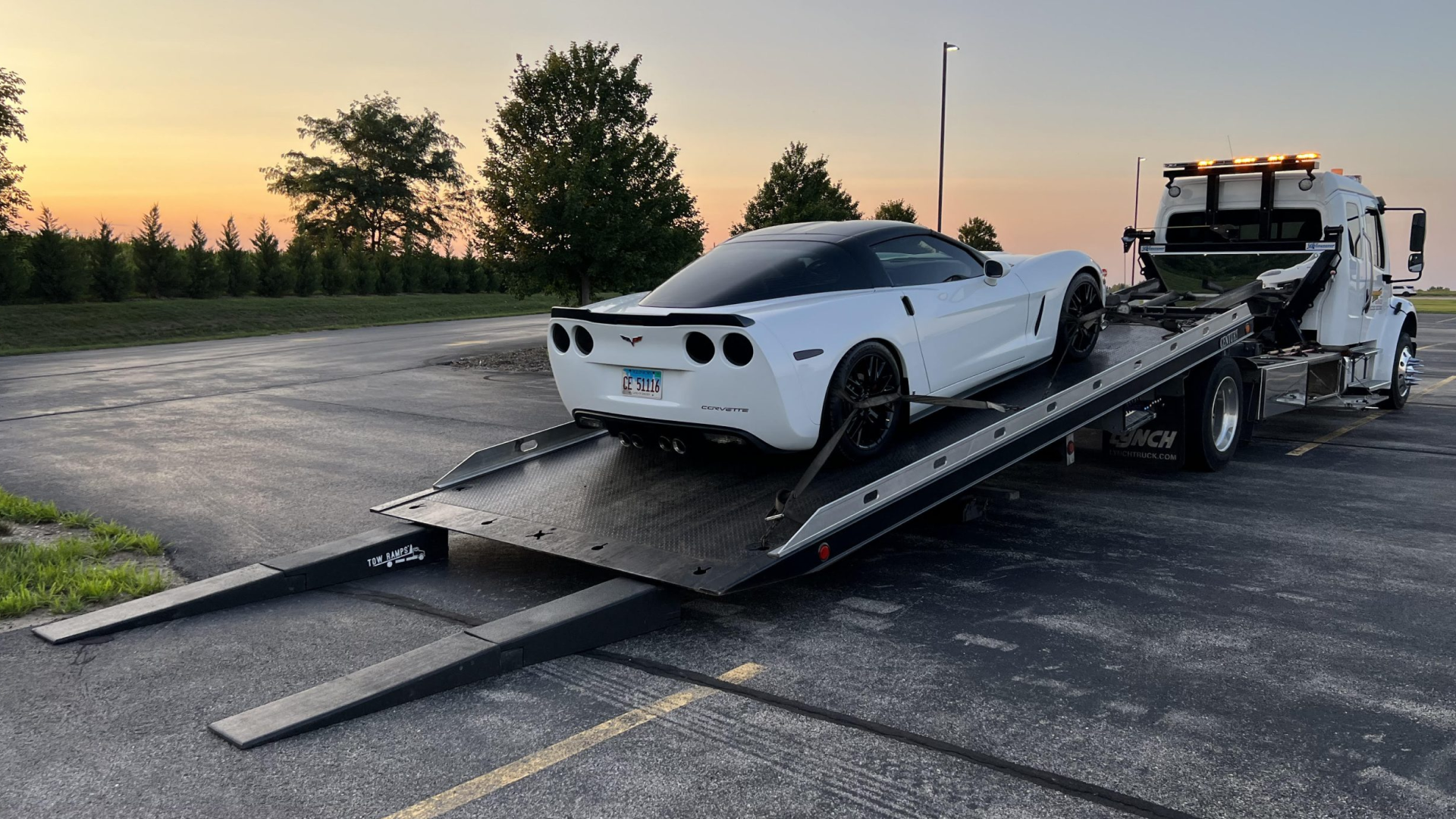
Flatbed towing can be a practical option for many lowered cars because the entire vehicle can be transported on a level platform rather than being pulled with two wheels on the road.
With a flatbed, the vehicle is loaded onto the truck and secured for transportation. This can reduce concerns associated with rolling a modified vehicle over long distances with its drive wheels on the ground.
However, a flatbed does not automatically eliminate clearance problems.
The vehicle still needs to get onto the platform. You can learn more about these methods by reading about how flatbed towing helps reduce vehicle wear during transportation.
Loading a Lowered Car Onto a Flatbed
A tow operator may need to use equipment or techniques that reduce the loading angle.
Depending on the vehicle and towing equipment, this may include:
Positioning the truck carefully
Using a longer or lower-angle approach
Using suitable loading ramps
Adjusting the vehicle's suspension when possible
Using specialized wheel or recovery equipment
Moving the vehicle slowly and carefully
Checking clearance throughout the loading process
The correct approach depends on the vehicle's ride height, condition, wheel configuration, and the equipment available.
Why Slow Loading Matters
A lowered vehicle should not simply be pulled quickly onto a tow truck.
Slow movement gives the operator an opportunity to watch the bumper, wheels, underbody, suspension, and other low-clearance components.
If something begins to contact the ramp or platform, the operator can stop and reassess the loading method.
That extra attention can be especially important for modified cars with expensive bodywork or aftermarket components, similar to the care taken during show car hauling.
What Parts of a Lowered Vehicle Are Most at Risk?
A lowered vehicle can have several vulnerable areas.
Front Bumper and Lip
The front bumper is often one of the first components that may contact a ramp. An aftermarket front lip or splitter can make the clearance even smaller.
A component that sits only slightly above the pavement during normal driving may have very little room during loading.
Side Skirts
Side skirts can extend lower than the vehicle's original body panels. If the loading equipment or towing straps are positioned incorrectly, they can become vulnerable to contact or pressure.
Exhaust Components
Modified exhaust systems may have components positioned lower than the factory setup. Contact with a ramp, road surface, or recovery equipment can potentially damage them.
Suspension and Underbody Components
Lowered vehicles may have less space between the road and suspension or underbody components.
If the vehicle has already been involved in an accident, the risk becomes harder to assess because damaged suspension or body components may sit differently from their normal position.
Wheels and Tires
Specialty wheels and low-profile tires may require careful strap placement. The towing operator needs to secure the vehicle without interfering with delicate wheels, brake components, or other parts.
What Information Should You Give a Tow Truck Operator?
If you are calling for towing assistance for a lowered vehicle, tell the operator about the vehicle's condition and modifications before the truck arrives.
Useful information includes:
Tell them the vehicle is lowered.
Explain whether it has aftermarket suspension.
Mention an extremely low front bumper, splitter, or side skirts.
Describe whether the vehicle can roll normally.
Explain if the steering works.
Mention any accident damage.
Tell them if the vehicle is stuck in a garage, driveway, parking structure, or other restricted location.
Provide the vehicle's approximate make and model.
Explain whether the vehicle has air suspension or adjustable ride height.
Tell them if any wheel or tire is damaged.
This information helps the towing company determine what type of equipment and approach may be appropriate. Reading up on what information should you give a towing company when you call can also prepare you for the conversation.
Why the Vehicle's Location Matters
The same lowered car may be easy to tow from one location and difficult to recover from another.
A vehicle parked on a level driveway has different requirements from one sitting in an underground parking garage with a steep exit.
Likewise, a lowered vehicle stopped on a busy roadway may require a different recovery approach from one sitting safely in a private parking lot. Knowing what to do when your vehicle breaks down on a busy DFW road can keep you safe while waiting for help.
Location, clearance, traffic conditions, and vehicle condition all influence the towing process.
How Is a Lowered Vehicle Safely Prepared for Towing?
Preparation begins before the vehicle is moved.
Step 1: Assess the Vehicle
The operator should determine whether the vehicle can roll, steer, and move normally.
If the car cannot move under its own power, additional recovery equipment may be needed.
Step 2: Check Clearance
The operator should identify low points around the front bumper, side skirts, exhaust, suspension, and underbody.
This helps determine the safest loading path.
Step 3: Choose Appropriate Equipment
A flatbed may be suitable for many lowered vehicles, but the specific equipment should match the vehicle and situation.
If the vehicle is damaged or cannot roll, specialized recovery equipment may be necessary.
Step 4: Position the Tow Truck
The truck should be positioned to create a manageable loading path.
Small changes in positioning can approach angle and available clearance.
Step 5: Load Slowly
The vehicle should be moved carefully while the operator monitors clearance.
Stopping and repositioning is preferable to forcing a vehicle through an unsafe loading angle.
Step 6: Secure the Vehicle
Once loaded, the vehicle needs to be secured appropriately for transportation.
The operator should consider the wheels, tires, suspension, and vehicle configuration when positioning securement equipment.
What If a Lowered Vehicle Is Damaged After an Accident?
Accident recovery service can be more complicated than routine towing.
A collision can alter the vehicle's ride height, steering, suspension geometry, wheel position, or body clearance. A vehicle that was already lowered may have even less usable clearance after an impact.
Trying to drive the vehicle onto a tow truck may not be appropriate if the steering, suspension, wheels, or tires are damaged.
Accident Damage Requires Extra Assessment
Before moving the vehicle, the operator should consider whether it can safely roll and steer.
Potential warning signs include:
A wheel that is visibly misaligned
Severe suspension damage
A damaged tire
Fluid leaking from the vehicle
A bumper hanging unusually low
Steering that does not respond normally
Parts underneath the vehicle contacting the ground
If the vehicle cannot safely move, the recovery method needs to account for that condition rather than treating it like an ordinary tow.
Common Towing Mistakes to Avoid With Lowered Cars
Lowered vehicles can be damaged when the towing process is rushed or the vehicle's clearance is not considered.
Assuming Every Tow Truck Can Handle the Vehicle: Not every towing setup is ideal for every modified vehicle. Before dispatch, explain the vehicle's ride height and modifications so the operator has useful information before arriving.
Pulling the Vehicle at a Steep Angle: A steep loading angle can increase the chance of bumper or underbody contact. A slower, more controlled approach may be necessary.
Ignoring Existing Damage: A vehicle involved in an accident should not be treated as if it were mechanically normal. Existing damage can change the clearance and affect how the vehicle should be moved.
Using the Wrong Securement Point: Modified vehicles may have components that are unsuitable for towing or securement. The operator should use appropriate equipment and securement methods based on the vehicle.
Forgetting About Parking Structures: Low-clearance parking garages can create additional complications. The tow truck itself needs sufficient clearance, and the vehicle may need to be moved through ramps or tight turns before it can reach the street.
Lowered Vehicle Towing vs. Standard Vehicle Towing
The basic goal is the same: move the vehicle safely from one location to another. The difference is the amount of attention required during loading, clearance checks, and equipment selection.
A standard vehicle generally has more factory-designed clearance around the lower body and undercarriage.
A lowered or heavily modified vehicle may require more careful positioning and loading.
How Specialty Vehicle Towing Helps With Modified Cars
Lowered sports cars, performance vehicles, collector cars, and customized vehicles often require more consideration than ordinary transportation.
Specialty vehicle transport focuses on matching the transportation method to the vehicle.
For a modified vehicle, useful considerations may include:
Ride height
Vehicle weight
Wheel and tire configuration
Suspension type
Ground clearance
Whether the vehicle rolls and steers
Distance to the destination
Loading environment
Existing mechanical or collision damage
Long-distance towing may require additional planning because the vehicle will remain secured for a longer period.
The goal is to choose a transportation method that protects the vehicle while making the process practical for the situation.
What Should You Do Before Calling for a Tow?
A few simple steps can make the towing process easier.
Gather Vehicle Information: Have the vehicle's year, make, model, and approximate location available. If it has been modified, describe the modifications as clearly as possible.
Take Photos if It Is Safe: If you are in a safe location, photos can help communicate the vehicle's condition and clearance. Useful photos may show the front bumper, side profile, wheels, and any visible accident damage. Never put yourself in danger to take pictures, especially near active traffic.
Explain the Problem Clearly: Tell the towing provider whether the engine runs, transmission works, vehicle rolls, steering works, or if there is a tire damage or accident involvement.
Conclusion
Towing a lowered vehicle is more challenging primarily because reduced ground clearance changes the way the vehicle interacts with ramps, platforms, towing equipment, and uneven surfaces.
The front bumper, side skirts, exhaust, suspension, wheels, and underbody may have less room for error. Accident damage or difficult locations such as parking garages, steep driveways, and narrow roads can make the situation more complicated.
A careful towing process starts with accurate information. Tell the towing provider that the vehicle is lowered, explain any modifications or damage, and describe whether the car can roll and steer. From there, the operator can evaluate the vehicle, choose suitable equipment, control the loading angle, and secure the vehicle appropriately.
For lowered sports cars, modified vehicles, specialty vehicles, and other low-clearance cars, the safest approach is not simply finding a tow truck. It is finding a towing method that fits the vehicle and the conditions surrounding the recovery.
