

Roadside Assistance vs. Towing: Which One Do You Actually Need?
Introduction
A vehicle breakdown can turn an ordinary drive into a stressful situation. Your engine might refuse to start in a parking lot, a tire could blow out on a Dallas highway, or your car might suddenly become unsafe to drive after an accident. In those moments, knowing whether you need roadside assistance or a tow truck can save time, prevent additional vehicle damage, and help you make a safer decision.
Although roadside assistance and towing are closely related, they serve different purposes. Roadside assistance is designed to resolve certain problems where your vehicle is located. Towing moves your vehicle to another destination when the problem cannot be safely or practically fixed at the roadside.
The right choice depends on what went wrong, your vehicle's condition, your location, and whether a safe repair is possible. For drivers throughout Dallas-Fort Worth (DFW), understanding these differences is particularly useful when a breakdown happens on a busy road, during severe weather, or late at night.
This guide explains how roadside assistance and towing work, when each service makes sense, what they typically cost, and how to choose the right help when your vehicle leaves you stranded.
What Is the Difference Between Roadside Assistance and Towing?
The main difference is the purpose of the service. Roadside assistance helps address a vehicle problem at the breakdown location when a suitable roadside solution is possible. Towing transports a disabled, damaged, or otherwise unsuitable-to-drive vehicle to a repair shop, residence, storage facility, or another agreed destination.
What Is Roadside Assistance?
Roadside assistance provides help for common vehicle problems that may be resolved without transporting the vehicle. Depending on the provider, vehicle, and circumstances, services can include:
Battery jump-starts: Supplying enough power to start a vehicle with a discharged battery.
Flat tire assistance: Replacing a damaged tire with a usable spare when conditions and equipment allow.
Fuel delivery: Bringing a limited amount of fuel to a vehicle that has run out.
Vehicle lockout assistance: Helping regain access when keys are locked inside, subject to the vehicle's locking system and the technician's capabilities.
Minor roadside support: Assessing a problem and helping determine whether the vehicle can safely continue or requires towing.
Roadside assistance is most appropriate when the issue is limited, the vehicle remains structurally safe, and the problem can be addressed at the scene.
For example, a driver in a DFW shopping center parking lot may need a jump-start after accidentally leaving the headlights on. If the battery and charging system are otherwise functioning properly, a jump-start may be sufficient to get the vehicle running.
However, a successful start does not guarantee that the vehicle is mechanically sound. If the battery repeatedly dies, the engine runs poorly, or warning lights appear, further inspection may be necessary.
What Is Towing?
Towing involves transporting a vehicle using specialized equipment rather than relying on its ability to drive under its own power.
A tow may be necessary when the vehicle has suffered significant mechanical failure, sustained accident damage, or developed a safety problem that cannot be corrected at the roadside.
Common reasons to request towing include:
Engine failure or severe overheating.
Transmission problems that make driving unsafe.
Accident damage affecting steering, suspension, or wheels.
A flat tire when no usable spare is available.
Brake problems that prevent safe stopping.
Electrical failures that leave the vehicle inoperable.
A vehicle stuck in a ditch, mud, or another difficult position that requires recovery.
A vehicle that cannot safely be driven to a repair facility.
Towing is not limited to badly damaged vehicles. A car can look perfectly normal but still have a serious mechanical issue that makes continued driving risky.
For instance, if your engine overheats repeatedly on Interstate 635, stopping and arranging a tow is generally safer than repeatedly restarting the vehicle and attempting to reach the next exit.
When Should You Choose Roadside Assistance?
Roadside assistance is often the first option to consider when the problem appears manageable and the vehicle is in a safe location.
Your Battery Is Dead
A discharged battery is a common reason for roadside service. You may notice that the engine will not crank, the dashboard lights flicker, or the vehicle makes a clicking sound when you turn the key or press the start button.
A technician can assess the situation and attempt a jump-start when appropriate. If the vehicle starts, the technician may recommend further testing if the battery is old, the charging system appears faulty, or the problem has happened repeatedly.
Do not assume every no-start condition is a battery problem. A failed starter, damaged wiring, fuel delivery issue, or other mechanical fault may require diagnosis and towing.
You Have a Flat Tire and a Spare
A roadside tire change may be suitable if the vehicle has an appropriate spare tire, the wheel can be removed safely, and the vehicle is positioned away from moving traffic.
Some modern vehicles have tire repair kits instead of spare tires. Others use run-flat tires with specific driving limitations. The correct response depends on the manufacturer's instructions and the tire's condition.
Never attempt to change a tire beside fast-moving traffic simply because you have the necessary equipment. If the location is dangerous, prioritize getting to safety and requesting professional assistance.
You Have Run Out of Fuel
If your vehicle stops because the tank is empty, fuel delivery may get you moving again. The amount supplied and the types of fuel available depend on the service provider.
Before requesting help, confirm the vehicle's fuel type and explain your location as accurately as possible. If the vehicle stopped for another reason, adding fuel will not solve the underlying problem.
Your Keys Are Locked Inside
A vehicle lockout service may help you regain access without towing the car. Modern vehicles can have sophisticated security systems, so the available method depends on the make, model, and locking mechanism.
Tell the dispatcher if the vehicle is running, if a child or vulnerable person is inside, or if another immediate safety concern exists. An emergency involving a person or animal trapped in a hot vehicle requires urgent action rather than waiting for routine service.
When Do You Actually Need a Tow Truck?
Towing becomes the better choice when a roadside fix is unavailable, unsuccessful, or insufficient to make the vehicle safe.
Your Engine Is Overheating
An overheating engine can suffer serious damage if driven further. Warning signs include a temperature gauge entering the danger zone, steam coming from under the hood, or a temperature warning appearing on the dashboard.
Pull over somewhere safe, turn off the engine, and request assistance. Never remove a radiator cap while the cooling system is hot because pressurized coolant can cause severe burns.
Even if the engine cools down, the original problem may remain. A coolant leak, damaged radiator, failed water pump, or other cooling-system issue can make driving unsafe. Towing to a repair shop is often the prudent choice.
Your Vehicle Has Serious Accident Damage
After a collision, damage may affect components that are difficult to evaluate from the driver's seat. Bent suspension parts, damaged wheels, leaking fluids, or compromised steering can make a vehicle unsafe even if the engine still runs.
If the vehicle is blocking traffic or remains in a dangerous location, contact emergency services when appropriate and follow local instructions. Once the scene is safe, arrange accident recovery based on the vehicle's condition.
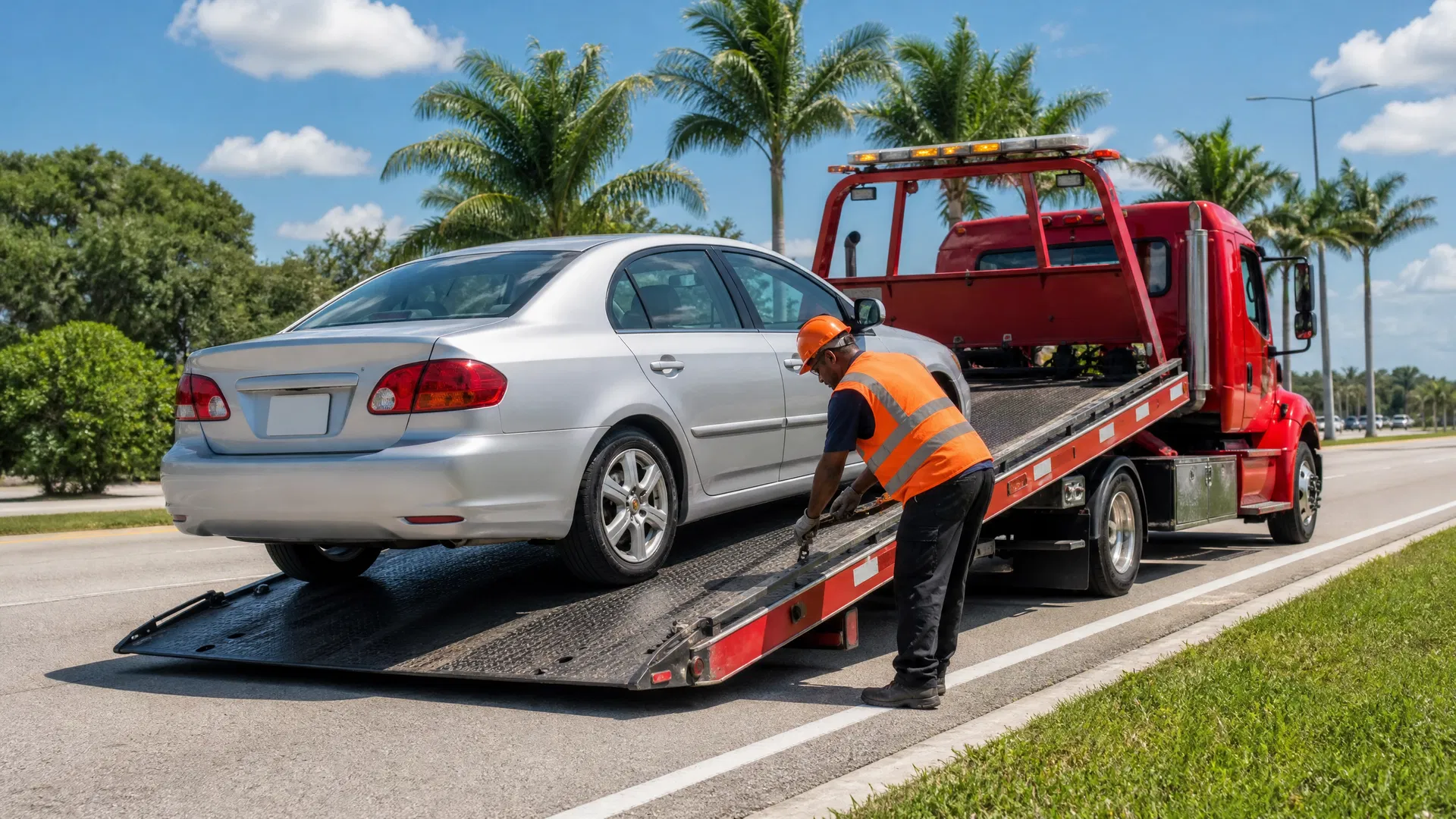
A flatbed tow truck may be suitable for a damaged vehicle, especially when its wheels cannot roll normally or additional clearance is needed. The operator should assess the vehicle before choosing the loading method.
Your Brakes or Steering Are Not Working Properly
Brake failure, a soft or sinking brake pedal, severe grinding, or sudden steering difficulties should never be treated as minor inconveniences.
If you can do so safely, bring the vehicle to a controlled stop away from traffic. Do not continue driving to test whether the problem disappears.
Request towing to a qualified repair facility. Continuing to drive with compromised braking or steering can put you and other road users at risk.
Your Vehicle Cannot Be Repaired at the Scene
Some problems require diagnostic equipment, replacement parts, specialized tools, or a controlled repair environment. Roadside assistance may identify the issue without being able to resolve it.
For example, an alternator failure may leave a vehicle running only briefly before the electrical system loses power. A jump-start alone will not repair the charging system.
When a roadside technician determines that a safe, lasting fix is not possible, towing provides the next step toward proper diagnosis and repair.
Roadside Assistance vs. Towing: Key Factors to Compare
Choosing the right service becomes easier when you evaluate the problem rather than automatically requesting the cheapest option.
The Type of Vehicle Problem
Consider whether the problem has a straightforward roadside solution.
A dead battery, lockout, or empty fuel tank may be manageable without towing. A damaged suspension, serious engine problem, or failed brakes generally requires a different response.
If the cause is uncertain, explain your symptoms to the dispatcher. Describe dashboard warnings, unusual sounds, fluid leaks, smoke, or whether the engine starts. Accurate details help the provider determine which service is appropriate.
Vehicle Safety
Safety should outweigh convenience.
A vehicle that starts after a jump may still be unsafe because of an electrical fault. Similarly, a car with a tire replacement completed may not be roadworthy if the wheel is damaged or another mechanical problem is present.
If you are unsure whether driving is safe, explain the concern and request professional guidance. Never continue driving simply to avoid a tow.
Location and Traffic Conditions
A breakdown in a quiet parking lot presents different challenges from a breakdown on a crowded DFW highway.
Road shoulders can be narrow, traffic can move quickly, and some breakdown locations offer little protection from passing vehicles. Weather, darkness, construction, and limited visibility can increase the danger.
Move away from traffic when it is safe to do so. If your vehicle is on a dangerous highway shoulder, remain aware of approaching traffic and follow emergency guidance. Call 911 if the situation presents an immediate hazard, involves injuries, or requires emergency traffic assistance.
Time and Service Availability
A minor issue may be resolved quickly once a technician arrives, but arrival and completion times vary with traffic, weather, location, equipment availability, and service demand.
If the problem requires towing, the destination and loading requirements can affect the process. A vehicle with locked wheels or accident damage may need additional equipment or preparation.
When requesting 24/7 towing or roadside assistance in Dallas-Fort Worth, explain the vehicle's condition, exact location, and any safety concerns so the dispatcher can coordinate the appropriate help.
How Much Does Roadside Assistance or Towing Cost?
There is no single price for every breakdown. The final cost depends on the service required, location, vehicle type, distance, and operating conditions.
Factors That Affect Roadside Assistance Pricing
Roadside assistance pricing may depend on:
The type of service, such as a jump-start, tire change, or lockout.
Whether you have an existing roadside assistance membership.
The distance the technician must travel.
The time of day and any applicable after-hours charges.
Special equipment or complications at the scene.
A membership or insurance benefit may cover certain services up to specified limits. Check your plan's terms before assuming that a particular callout is included.
Factors That Affect Towing Costs
Towing prices can depend on several additional considerations:
The distance from pickup to the destination.
The vehicle's size, weight, and condition.
Whether flatbed towing or specialized equipment is required.
Whether accident recovery or winching is necessary.
Difficult access, blocked wheels, or other loading complications.
Applicable after-hours or service-related charges.
A short tow for a normally accessible car may cost less than recovering a damaged vehicle from a ditch or transporting a specialty vehicle over a long distance.
Before authorizing service, ask about the estimated total, the included mileage, any additional mileage charges, and potential recovery or after-hours fees. Confirm whether storage or destination-related charges may apply.
The goal is to understand the expected cost before work begins, rather than comparing providers on a base rate alone.
What to Do When Your Vehicle Breaks Down in Dallas-Fort Worth
A calm, organized response can reduce the risks associated with a roadside emergency.
Step 1: Get to a Safe Location
If the vehicle is still moving and can be controlled safely, move away from active traffic. Turn on your hazard lights and stop somewhere suitable.
Do not attempt to drive a vehicle with suspected brake failure, severe overheating, or significant collision damage merely to reach a more convenient location.
Step 2: Assess the Immediate Problem
Look for obvious warning signs without putting yourself in danger. Note whether the engine cranks, whether a tire is visibly damaged, whether warning lights appear, or whether there is smoke or a fluid leak.
Avoid touching hot components, standing near moving traffic, or attempting repairs beyond your ability.
Step 3: Decide Whether Roadside Assistance Is Appropriate
If the issue appears limited to a dead battery, empty tank, or accessible flat tire, roadside assistance may be sufficient.
If the vehicle has serious mechanical damage, cannot be started after an appropriate attempt, or cannot be driven safely, request towing. When the problem is unclear, describe the symptoms and let the dispatcher help identify the appropriate service.
Step 4: Share Your Exact Location
Provide the road name, direction of travel, nearest exit, cross street, or a recognizable landmark. If you can safely access a phone map, sharing a location pin can reduce confusion.
On a highway, specify whether you are on the main lanes, a frontage road, an entrance ramp, or an exit ramp. This is particularly helpful across the extensive DFW road network.
Step 5: Confirm the Service and Destination
Explain the vehicle's make, model, and condition. Mention whether it has all-wheel drive, low ground clearance, accident damage, locked wheels, or other features that may affect loading.
If towing is required, confirm the destination and estimated price before authorizing the service. If a roadside fix is attempted but fails, ask whether towing can be arranged next.
How to Choose Between Flatbed and Wheel-Lift Towing
When towing is necessary, the equipment matters. Flatbed and wheel-lift towing serve different situations, and the appropriate choice depends on the vehicle and the manufacturer's requirements.
Flatbed Towing
Flatbed towing places the vehicle on a platform so all four wheels are lifted off the road during transport.
It can be a good option for:
Vehicles with significant accident damage.
Many all-wheel-drive vehicles, when required by the manufacturer.
Low-clearance or specialty vehicles.
Motorcycles when suitable motorcycle towing equipment and securement are available.
Vehicles that should not have their tires rolling during transport.
Flatbed towing is not automatically required for every vehicle. The operator should consider the owner's manual, drivetrain, condition, and loading constraints.
Wheel-Lift Towing
Wheel-lift towing uses a specialized lifting mechanism to raise one end of the vehicle while the other wheels remain on the ground, unless additional equipment is used.
It may be suitable for certain conventional passenger vehicles when the method is compatible with the drivetrain and manufacturer's towing instructions.
However, it may not be appropriate for every all-wheel-drive vehicle, damaged vehicle, or car with locked or compromised wheels. Incorrect towing methods can cause additional damage.
When requesting a tow, explain the vehicle type and any mechanical problems. A qualified operator can select suitable equipment based on the circumstances.
Common Misconceptions About Roadside Assistance and Towing
Roadside Assistance Can Fix Any Breakdown
Roadside assistance covers specific services, not every possible mechanical failure. A technician may be able to jump-start a vehicle or change a tire but cannot necessarily repair an engine, transmission, or major electrical fault at the roadside.
A Car That Starts Is Safe to Drive
Starting the engine does not prove that the vehicle is roadworthy. Overheating, damaged tires, brake problems, steering faults, and serious warning lights can make driving dangerous even when the engine runs.
Towing Is Only Necessary After an Accident
Mechanical failures, dead charging systems, damaged tires, and other problems can require towing without any collision. The determining factor is whether the vehicle can be transported safely by driving it.
The Cheapest Initial Quote Is Always the Best Choice
A low starting price may not include additional mileage, recovery work, specialized equipment, or after-hours charges. Compare the expected total cost and the service being provided before making a decision.
Conclusion
The choice between roadside assistance and towing comes down to the nature of the problem and whether your vehicle can be made safe where it stopped.
Roadside assistance is often appropriate for manageable issues such as a dead battery, flat tire with a usable spare, vehicle lockout, or empty fuel tank. Towing is generally the better choice when the vehicle has significant mechanical trouble, accident damage, compromised steering or brakes, or another condition that makes driving unsafe.
For drivers in Dallas-Fort Worth, location and traffic conditions also matter. A simple breakdown on a quiet street may allow a straightforward roadside fix, while the same problem on a busy highway could require a more cautious response.
Prioritize safety, explain the vehicle's symptoms accurately, and ask about service options and pricing before authorizing work. Infront Towing provides 24/7 towing and roadside assistance across the DFW area, including flatbed towing, accident recovery, motorcycle transport, jump-starts, tire changes, fuel delivery, and long-distance towing.
Knowing which service you need can help you make a more informed decision, avoid unnecessary risks, and get your vehicle to the right destination.
Frequently Asked Questions
1. What Is the Difference Between Roadside Assistance and Towing?
Roadside assistance helps resolve certain vehicle problems at the breakdown location, such as a dead battery, flat tire, or lockout. Towing transports a disabled or unsafe vehicle to a repair shop or another destination when a roadside solution is not possible.
2. Should I Call Roadside Assistance or a Tow Truck for a Car That Won't Start?
Roadside assistance may be appropriate if the problem is a discharged battery or another issue that can be resolved at the scene. If a jump-start does not work, the cause is unknown, or the vehicle has a serious mechanical problem, towing may be necessary.
3. How Much Does a Tow Truck Cost in the Dallas-Fort Worth Area?
Towing costs depend on distance, vehicle type, pickup conditions, equipment, and possible after-hours or recovery charges. Request an estimate that explains the included mileage and additional fees before authorizing the service.
4. Can Roadside Assistance Change a Flat Tire?
Many roadside assistance providers offer tire-changing services if the vehicle has a suitable spare and the location is safe for the work. If there is no spare, the wheel is damaged, or traffic conditions are dangerous, another solution or towing may be required.
5. When Should I Request Flatbed Towing?
Flatbed towing may be appropriate for vehicles with significant accident damage, many all-wheel-drive vehicles, low-clearance cars, and specialty vehicles. The correct method depends on the manufacturer's towing instructions, vehicle condition, and equipment available.
6. Is It Safe to Drive After Getting a Jump-Start?
Not always. A jump-start may restore power, but it does not repair a failing battery, alternator, or electrical system. If warning lights remain on, the vehicle repeatedly loses power, or other safety problems appear, have it inspected and arrange towing when necessary.
7. What Should I Do If My Car Breaks Down on a DFW Highway?
Turn on your hazard lights and move to a safer location if the vehicle can be controlled. Stay alert to traffic, avoid repairs beside moving vehicles, and provide your precise location when requesting help. Contact emergency services if there is immediate danger or an injury.
8. Does Car Insurance Cover Roadside Assistance and Towing?
Some auto insurance policies offer optional roadside assistance or towing coverage, while others do not. Coverage limits, eligible situations, mileage allowances, and reimbursement requirements vary, so review your policy or contact your insurer before assuming a service is covered.
9. Can I Request Towing at Night or During the Weekend?
Yes, providers offering 24/7 towing can respond to breakdowns outside normal business hours. Arrival times depend on traffic, weather, location, and service demand. Confirm availability, estimated arrival time, and any applicable after-hours charges when you call.
10. What Information Should I Give a Towing Company When Requesting Help?
Provide your exact location, vehicle make and model, the nature of the problem, and whether the vehicle can roll or steer. Mention accident damage, locked wheels, low ground clearance, or drivetrain requirements. If towing is needed, confirm the destination and estimated total cost before authorizing service.
