

What Happens When a Tow Truck Arrives at Your Location?
Introduction
Calling a tow truck is often the last thing you want to do after a breakdown, flat tire, dead battery, collision, or roadside problem. If you have never used a towing service before, you may wonder what happens after the truck arrives. Does the driver inspect the vehicle first? Do you need to explain what went wrong? How is the vehicle connected to the truck, and what should you do while it is being loaded?
Knowing the process can make an unexpected roadside situation feel much more manageable. A professional tow truck operator typically starts by confirming the vehicle, assessing its condition and position, determining the safest towing method, and communicating what will happen next.
The exact procedure depends on the vehicle, the reason for the tow, the location, and the equipment required. A disabled sedan on a residential street may need a simple wheel-lift tow, while an accident-damaged SUV, motorcycle, or specialty vehicle may require a flatbed or specialized recovery equipment.
This guide explains what you can expect from the moment a tow truck arrives until your vehicle is safely transported. For more related insights, check out this guide on choosing the right towing service based on your vehicle and situation.
What Does a Tow Truck Driver Do When They Arrive?
The first priority is safety. Before connecting equipment, the tow truck driver needs to understand the situation and determine whether the vehicle can be moved safely.
The process usually includes several basic steps:
Locate and identify the vehicle.
Assess the vehicle and surrounding area.
Confirm the reason for the tow or roadside service.
Determine the appropriate equipment and towing method.
Prepare the vehicle for loading or roadside assistance.
Secure the vehicle properly.
Transport it to the requested destination.
The process can take only a short time for a straightforward tow, but complicated situations may require additional preparation.
The Driver Confirms Your Location and Vehicle
If you provided a description when requesting assistance, the driver may confirm details such as the vehicle's make, model, color, license plate, or exact location.
This matters because busy roads, parking lots, highways, and large commercial properties can make it difficult to identify the correct vehicle immediately.
If you are parked on the shoulder, remain in a safe location while the driver approaches whenever conditions allow.
The Driver Assesses the Situation
Before moving the vehicle, the operator looks at factors such as:
Whether the vehicle starts or rolls
Damage to the front, rear, wheels, or suspension
Flat or damaged tires
Steering or braking problems
The vehicle's position
Traffic conditions
Available space around the vehicle
Road surface and terrain
Whether special towing equipment is required
A vehicle involved in an accident may need a different approach from a vehicle that simply has a dead battery.
The Driver Confirms What Service You Need
Sometimes the original problem changes after the tow truck arrives.
For example, you may have requested a tow because your car would not start. The driver may determine that the issue appears suitable for a jump start. If the vehicle starts but cannot be safely driven, towing may still be necessary. You can read more about battery-related issues in this article on dead battery on the road: a complete guide to jump start services.
A professional operator should explain the available approach before proceeding when the situation allows.
How Is a Vehicle Prepared for Towing?
Once the towing method is determined, the driver prepares the vehicle and equipment. The goal is to prevent unnecessary movement and reduce the risk of additional damage during loading and transportation.
Checking Whether the Vehicle Can Roll
A tow operator needs to know whether the wheels can move freely.
A vehicle with a locked wheel, severe suspension damage, or significant collision damage may not be suitable for a basic towing method. The operator may need additional equipment to move it safely.
This is one reason it helps to describe the vehicle's condition accurately when requesting roadside assistance.
Preparing the Vehicle
Depending on the situation, the driver may need to:
Place the transmission in the appropriate position
Release the parking brake when possible
Check the steering
Position the wheels correctly
Remove or secure loose items when necessary
Use towing straps, chains, or other approved equipment
Position the truck for loading
The exact steps vary based on the vehicle and towing equipment.
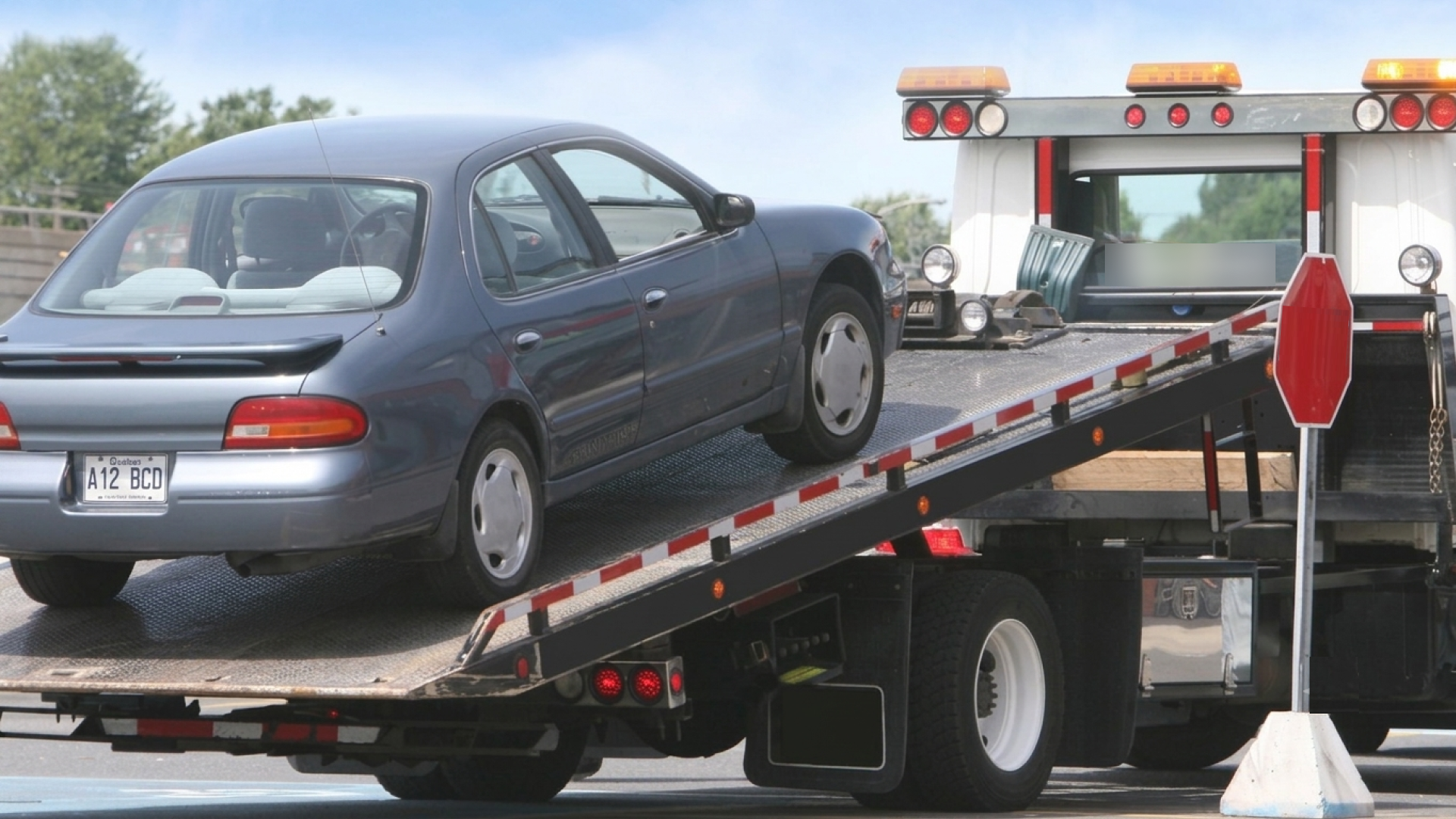
Loading a Vehicle Onto a Flatbed
Flatbed towing is commonly used when keeping all four wheels off the road is beneficial or when the vehicle requires a more controlled transport method.
The tow truck's bed is positioned to create a loading path. The vehicle may then be pulled onto the bed using a winch if it cannot drive onto the platform.
Once loaded, the operator secures the vehicle according to the equipment and vehicle requirements.
Flatbed towing can be particularly useful for certain accident-damaged vehicles, vehicles with drivetrain concerns, motorcycles, specialty vehicles, and situations where the customer specifically needs this type of transport. Learn more about its advantages in how flatbed towing helps reduce vehicle wear during transportation.
How Does Wheel-Lift Towing Work?
A wheel-lift tow truck uses equipment that lifts one end of a vehicle while the other end remains on the road.
The driver positions the lifting equipment under the appropriate wheels and secures the vehicle before raising it.
Wheel-lift towing can be practical for many standard vehicles, particularly when the vehicle is accessible and its condition is suitable for this method.
The correct towing method depends on the vehicle rather than simply the driver's preference.
Why the Towing Method Matters
Using unsuitable equipment can create unnecessary risk. A professional operator considers the vehicle's drivetrain, steering, suspension, wheels, body condition, and overall accessibility before moving it.
For example, a vehicle with significant front-end accident damage may require a different loading procedure from a normally functioning vehicle that simply needs transportation.
What Happens After the Vehicle Is Connected?
Once the vehicle is properly positioned and secured, the operator performs final checks before leaving.
The driver may check:
That towing connections are secure
That straps or other restraints are properly positioned
That the vehicle is stable
That doors and accessible components are secure
That the towing setup is appropriate for the vehicle
That the route can be traveled safely
This part of the process is easy for customers to overlook, but proper securing is a key part of vehicle transportation.
What Should You Do While Your Vehicle Is Being Loaded?
Your job is primarily to stay safe and follow the driver's instructions.
Avoid standing between the tow truck and your vehicle, underneath lifted equipment, or directly beside moving components.
If you have personal belongings inside the vehicle, tell the driver if something needs attention before departure. Do not attempt to climb into or move around the vehicle while it is being loaded.
What Happens During Accident Recovery?
Accident recovery can be more complicated than an ordinary breakdown tow.
A collision may leave a vehicle facing the wrong direction, partially off the road, against another object, or with damaged wheels or suspension components.
The Driver Evaluates Accident Damage
The operator first considers whether the vehicle can be moved normally.
If the wheels are damaged or the vehicle cannot roll, specialized recovery equipment may be necessary. In some cases, the vehicle must be carefully repositioned before it can be loaded.
The driver also has to consider traffic, roadside hazards, the vehicle's final position, and the safest way to access it. For deeper insights, read accident recovery services explained: what drivers need to know after a collision.
Recovery May Require More Than a Standard Tow
Vehicle recovery can involve winching, controlled repositioning, specialized straps, or other equipment.
The objective is not simply to pull the vehicle away. The vehicle must be stabilized and moved in a controlled manner that accounts for its condition and surroundings.
This distinction is especially relevant after serious collisions, off-road incidents, or situations where a vehicle has become stuck.
What Happens If Your Vehicle Needs a Jump Start Instead?
Not every tow truck visit ends with a tow.
If the vehicle has a dead battery and the vehicle and situation are suitable, roadside assistance may include a jump start.
The driver may inspect the battery area and connections before attempting to provide a jump. If the vehicle starts and appears safe to drive, you may be able to continue without having the vehicle transported.
However, a jump start does not necessarily mean the underlying battery or charging-system problem has been solved. If the vehicle stops again, professional inspection or repair may still be needed.
What Happens If You Have a Flat Tire?
A flat tire may be handled as a roadside service rather than a tow.
If you have a usable spare tire and the vehicle can safely be serviced where it is located, a technician may replace the damaged tire with the spare using a professional tire change service.
Conditions matter. A damaged wheel, missing spare, unsafe shoulder, or difficult vehicle position may make towing a safer option. You can read more in how professional tire change services improve roadside safety.
Never place yourself in a dangerous position simply to avoid calling for assistance.
What Happens If You Run Out of Fuel?
Fuel delivery is another situation where a tow may not be necessary.
A roadside assistance provider may deliver enough fuel to help you reach a fuel station through emergency fuel delivery, depending on the service requested and local availability.
After receiving fuel, the driver may leave once the vehicle is ready to operate. If the vehicle still does not start, the situation becomes a mechanical or electrical problem that may require further assistance.
What Happens When a Motorcycle Needs Towing?
Motorcycles require different handling than passenger cars.
A motorcycle may need specialized equipment and securement procedures to prevent it from shifting during transportation. The operator needs to account for the motorcycle's weight distribution, wheels, handlebars, fairings, and other components.
Motorcycle towing utilizing flatbed transportation can be an appropriate option for many towing situations because the entire motorcycle can be transported on the truck rather than being pulled on its own wheels. For expert guidance, read how professional motorcycle towing protects your bike during transport.
The operator should select equipment that matches the motorcycle and the circumstances.
What Happens With Specialty Vehicles?
Specialty vehicles can include vehicles with unusual dimensions, modified vehicles, high-value vehicles, recreational vehicles, or other transportation needs that are not well suited to a basic tow. For high-end models, show car hauling or flatbed transport is ideal.
The most useful step is to explain the vehicle's characteristics before assistance arrives.
Tell the towing provider if the vehicle:
Has very low ground clearance
Has oversized or modified components
Cannot roll
Has damaged wheels
Has unusual dimensions
Requires special handling
Contains equipment that needs additional consideration
Providing accurate information helps the operator arrive with appropriate equipment.
What Should You Do Before the Tow Truck Arrives?
A little preparation can make the roadside experience easier.
Move to a Safe Location
If the vehicle is on a busy road and you can safely move it away from traffic without creating additional risk, do so. Otherwise, remain in a safe location and use your hazard lights when appropriate.
Do not attempt a repair in an unsafe traffic environment.
Gather Important Information
Have the following information available:
Exact location
Vehicle make and model
License plate information
Description of the problem
Whether the vehicle starts
Whether the vehicle rolls
Visible damage
Desired destination
For highway breakdowns, landmarks, exit numbers, nearby businesses, and direction of travel can help the tow operator find you faster.
Remove Important Personal Items
If the vehicle is going to a repair shop or another destination, remove valuables and essential personal belongings when it is safe to do so.
You should also take anything you will need during the remainder of your trip.
What Should You Expect After the Tow?
After the vehicle reaches the destination, the towing portion of the service is generally complete.
If the vehicle is going to a repair shop, the shop will handle diagnosis and repairs. The tow operator's responsibility is to transport the vehicle safely to the agreed destination.
Before the truck leaves, confirm that the vehicle has been delivered to the correct location and that you have everything you need.
If there is any uncertainty about the destination or vehicle condition, communicate with the towing provider before departure.
Common Misconceptions About Tow Truck Service
A Tow Truck Always Means My Vehicle Will Be Towed
Not necessarily.
A tow truck can provide several types of roadside assistance, including jump starts, tire changes, fuel delivery, and vehicle recovery.
The correct service depends on the problem.
Every Vehicle Can Be Towed the Same Way
Vehicles differ significantly in design and condition.
A standard sedan, motorcycle, accident-damaged SUV, and specialty vehicle may require completely different equipment or procedures.
The Cheapest Towing Method Is Always the Best
Price should not be the only consideration.
The towing method must be appropriate for the vehicle and situation. Choosing unsuitable equipment simply because it costs less can create unnecessary risk.
You Should Stay Beside the Vehicle During Loading
Your safety comes first.
The operator may ask you to stand in a particular location while equipment is being positioned. Follow those instructions rather than trying to assist with the loading process yourself.
How to Choose a Towing Service in the DFW Area
When selecting a towing company like Infront Towing, look for a provider that can clearly explain the service you need and has equipment suited to your vehicle.
Useful questions include:
What type of towing equipment will be used?
Can you handle my vehicle type?
Can you provide accident recovery?
Do you offer roadside assistance?
Is 24/7 service available?
Where can the vehicle be transported?
What information do you need before dispatching a truck?
A provider offering several forms of roadside assistance may be useful because the exact solution is not always obvious until the vehicle is inspected. You can find more tips in how to choose a towing company in the DFW metroplex.
For businesses, vehicle owners, and fleets, choosing a dependable towing provider can also become part of a broader operational plan, much like maintaining reliable vendors for other essential services.
Practical Takeaways Before Calling a Tow Truck
If you need roadside assistance, remember these basic steps:
Get yourself and passengers to a safe location when possible.
Turn on hazard lights if appropriate.
Provide an accurate location.
Describe the vehicle and problem clearly.
Mention accident damage or unusual vehicle characteristics.
Ask what type of service may be appropriate.
Follow the tow operator's safety instructions.
Keep clear of moving or lifting equipment.
Remove important personal belongings when safe.
Confirm the destination before the vehicle leaves.
A clear description of the situation helps the towing provider determine what equipment may be needed before arriving.
Conclusion
When a tow truck arrives, the process usually begins with a safety assessment rather than immediately connecting a vehicle and driving away. The operator identifies the vehicle, evaluates its condition and surroundings, chooses an appropriate towing or roadside assistance method, and secures the vehicle before transportation.
The details can vary significantly. A dead battery may require a jump start, while a flat tire may be handled roadside. A heavily damaged vehicle may require accident recovery, and a motorcycle or specialty vehicle may need specialized transportation equipment.
The best thing you can do is provide accurate information, stay in a safe location, and follow the driver's instructions. Understanding what happens during a tow can make the experience less stressful and help ensure the vehicle receives the right type of assistance.
Frequently Asked Questions
What Should I Do If My Car Breaks Down on a DFW Highway?
Move away from traffic if it is safe to do so, turn on your hazard lights, and contact roadside assistance. Provide the highway, direction of travel, exit number, nearby landmark, and vehicle description so the tow operator can locate you.
How Much Does a Tow Truck Cost in the Dallas-Fort Worth Area?
Towing prices vary based on factors such as distance, vehicle type, towing method, time, location, and whether specialized recovery equipment is required. Ask for pricing details before service whenever possible.
When Should You Choose Flatbed Towing for Your Vehicle?
Flatbed towing can be useful when you want all four wheels off the road or when a vehicle's condition makes conventional towing unsuitable. It is commonly considered for certain damaged, specialty, luxury, motorcycle, and non-running vehicles.
What Should I Do After a Car Accident If My Vehicle Cannot Be Driven?
Move to a safe location, contact emergency services when necessary, and arrange towing or recovery if the vehicle cannot be safely driven. Tell the towing provider about visible damage so the operator can plan the appropriate recovery method.
What Should I Do If My Car Won’t Start and I’m Stuck on the Road?
Get to a safe location and contact roadside assistance. Explain whether the vehicle makes any sound when you attempt to start it, whether electrical systems work, and whether you suspect a dead battery or another problem.
How Does 24/7 Emergency Towing Work in the DFW Area?
You contact a towing provider, provide your location and vehicle information, explain the problem, and request the appropriate service. The operator then dispatches suitable equipment based on the situation and transports or assists the vehicle as needed.
What Is the Difference Between Flatbed Towing and Wheel-Lift Towing?
A flatbed carries the vehicle on a platform with the vehicle's wheels off the road. Wheel-lift towing raises one end of the vehicle while the other end remains on the road. The appropriate method depends on the vehicle and its condition.
Can a Towing Company Safely Transport a Motorcycle or Specialty Vehicle?
Yes, provided the towing company has appropriate equipment and experience for the vehicle. Motorcycles and specialty vehicles may require different loading and securement procedures than standard passenger vehicles.
What Should I Do If I Get a Flat Tire on a Dallas-Fort Worth Road?
Move to a safe location if possible, turn on your hazard lights, and request roadside assistance if you cannot safely change the tire. Avoid standing near moving traffic while attempting a tire change.
How Does Long-Distance Towing Work, and How Much Does It Cost?
Long-distance towing involves transporting a vehicle beyond the immediate local service area. Pricing depends on factors such as total distance, vehicle type, equipment, pickup location, destination, and transportation requirements. Get the details confirmed before arranging the trip.
