

How to Get Your Vehicle Ready for Long-Distance Transport
Introduction
Long-distance vehicle transport requires more preparation than a short tow across town. Whether you are moving to another state, sending a vehicle to a buyer, relocating a specialty vehicle, or arranging transportation after a breakdown, the condition of the vehicle and the details provided to the towing company can affect how smoothly the trip goes.
A properly prepared vehicle is easier to inspect, load, secure, and unload. Preparation also helps prevent avoidable problems such as loose items shifting inside the cabin, low tire pressure, inaccessible keys, or confusion about the vehicle's condition before transport.
The process does not have to be complicated. A few practical steps can help you protect the vehicle, give the towing professional the information they need, and make long-distance towing more predictable.
This guide explains how to prepare a car, truck, SUV, motorcycle, or specialty vehicle for long-distance transport, including what to remove, what to document, what mechanical information to provide, and what to check before the vehicle is loaded.
Confirm the Transport Details Before Pickup
Before the tow truck arrives, make sure you know exactly what type of transportation has been arranged. Long-distance towing can involve different equipment and loading procedures depending on the vehicle and its condition.
Give the towing company accurate information about:
Vehicle make, model, and approximate weight
Whether the vehicle starts and runs
Whether it can roll, steer, and brake
Tire condition and tire pressure
Any mechanical problems
Accident damage
Modified suspension or lowered clearance
All-wheel-drive or four-wheel-drive configuration
Aftermarket accessories
Whether the vehicle has special loading requirements
Pickup and delivery addresses
Contact information for both locations
A vehicle that runs normally may be loaded differently from one that has no power, damaged wheels, locked steering, or accident-related damage. For more insights on this topic, check out our guide on long-distance towing vs local-towing.
Tell the Towing Company About Vehicle Condition
Do not assume the driver will discover every problem after arriving.
If the vehicle has a dead battery, flat tire, seized wheel, damaged axle, broken suspension component, or steering problem, mention it before pickup. The information can help the towing provider determine whether additional recovery equipment is needed.
The same applies to specialty vehicles. A classic car, motorcycle, modified vehicle, luxury vehicle, or low-clearance sports car may require extra attention during loading and securing. You can learn more about protecting valuable rides in our post on show car hauling.
Confirm Pickup and Delivery Access
Consider the physical conditions at both locations.
A narrow driveway, underground parking garage, steep entrance, soft ground, restricted loading zone, or low overhead clearance can affect how a vehicle is accessed. If the vehicle is being delivered to a business, apartment complex, dealership, or storage facility, check whether there are restrictions on where a tow truck can enter.
Providing these details early can reduce delays during pickup and delivery.
Clean and Inspect the Vehicle Before Transport
A clean vehicle is easier to inspect before it leaves. Dirt, mud, or accumulated debris can hide scratches, dents, cracked lights, and other existing damage.
You do not need to perform a professional detailing service. A basic exterior wash and a quick interior cleanup are usually enough to make the vehicle's condition easier to document.
Remove Personal Belongings
Take personal items out of the passenger compartment, trunk, glove box, center console, door pockets, and other storage areas.
Remove items such as:
Electronics
Important documents
Sunglasses
Loose tools
Clothing
Food and drinks
Valuables
Garage or house keys
Prescription items
Fragile objects
Loose accessories
Personal belongings can shift during transportation and may be damaged. Some towing or transport arrangements may also have restrictions regarding personal property left inside the vehicle. For helpful tips, read our article on how to protect personal belongings.
Remove or Secure Loose Exterior Items
Check the outside of the vehicle for anything that could become loose during transport.
Depending on the vehicle, this may include:
Removable antennas
Roof-mounted accessories
Loose spoilers or trim
Custom ornaments
Bicycle racks
Cargo carriers
Magnetic signs
Removable mirrors or accessories
If you are unsure whether an accessory should remain installed, ask the towing provider before pickup.
Document the Vehicle's Condition
Taking photographs before long-distance transport gives you a useful record of the vehicle's condition before it leaves.
Walk around the vehicle and photograph each side. Take additional close-up pictures of existing scratches, dents, chips, cracked lights, damaged wheels, or other visible issues.
Photograph Important Areas
Useful photographs include:
Front of the vehicle
Rear of the vehicle
Driver's side
Passenger side
Wheels and tires
Windshield and windows
Existing body damage
Interior
Dashboard and odometer
Any aftermarket equipment
Make sure the pictures are clear enough to show the condition of the vehicle.
A photograph of a small scratch taken from several feet away may not provide much useful detail. Take a closer picture as well as a wider image showing where the damage is located.
Record the Odometer and Fuel Level
Take a photograph of the odometer before transportation. It provides a simple reference point for the vehicle's mileage at pickup.
The fuel level can also be documented. In many transport situations, there is no reason to carry a full tank of fuel. Ask Infront Towing whether it has a specific fuel-level requirement for your transportation arrangement.
Check the Vehicle's Tires and Wheels
Tires are especially important because the vehicle may need to roll during loading, positioning, and unloading.
Check whether all tires are inflated to the manufacturer's recommended pressure. Look for visibly damaged tires, exposed cords, severe sidewall damage, or wheels that have been bent or damaged.
Tell the Driver About Wheel Problems
If a wheel is locked, damaged, or unable to roll normally, tell the towing company before pickup.
A disabled vehicle may require specialized equipment to move it safely onto a flatbed or other transport equipment. Attempting to move a vehicle without accounting for damaged wheels or suspension components can create unnecessary risk.
Prepare the Battery and Mechanical Systems
Vehicle preparation depends partly on whether the vehicle is operational.
For a running vehicle, check basic conditions such as tire pressure and obvious leaks. For a disabled vehicle, provide accurate information about why it cannot be driven.
Tell the Driver If the Vehicle Does Not Start
A vehicle with a dead battery may only need a jump start before loading. Another vehicle may have a serious mechanical problem that prevents the engine from running.
Tell the towing company whether:
The engine starts
The transmission engages
The steering works
The brakes function
The wheels roll
The battery is dead
The vehicle has been in an accident
These details help the towing professional understand what will happen during loading.
Do Not Make Unnecessary Repairs Before Transport
If the vehicle is already being transported because of a mechanical failure, you do not necessarily need to repair it before pickup.
Instead, explain the problem accurately. A professional towing operator can determine what equipment and loading method are appropriate based on the vehicle's condition.
Check for Fluid Leaks
Look underneath the vehicle for obvious fluid leaks before pickup.
Fresh oil, coolant, transmission fluid, fuel, or other leaking fluids should be reported to the towing company. A leak may indicate mechanical damage that affects how the vehicle should be handled.
Do not attempt to diagnose a serious leak yourself simply to prepare the vehicle for transport. If you see an unusual puddle or smell fuel, communicate the issue to the towing provider.
Secure the Vehicle's Keys and Documents
Make sure the necessary keys are available.
Depending on the vehicle and transportation arrangement, the driver may need access to the ignition, steering, doors, trunk, or other parts of the vehicle.
Provide the Right Keys
If the vehicle has multiple keys, identify the key or key set needed for transportation. Keep spare keys in a safe place unless Infront Towing specifically requests them.
If the vehicle has a smart key or keyless ignition system, tell the driver about it.
Keep Important Documents Accessible
Have relevant vehicle information available, including registration or other documents required for your particular situation.
If the vehicle is being transported because of an accident, insurance or repair information may also be useful. Do not leave irreplaceable personal documents inside the vehicle.
Understand Why Flatbed Towing May Be Used
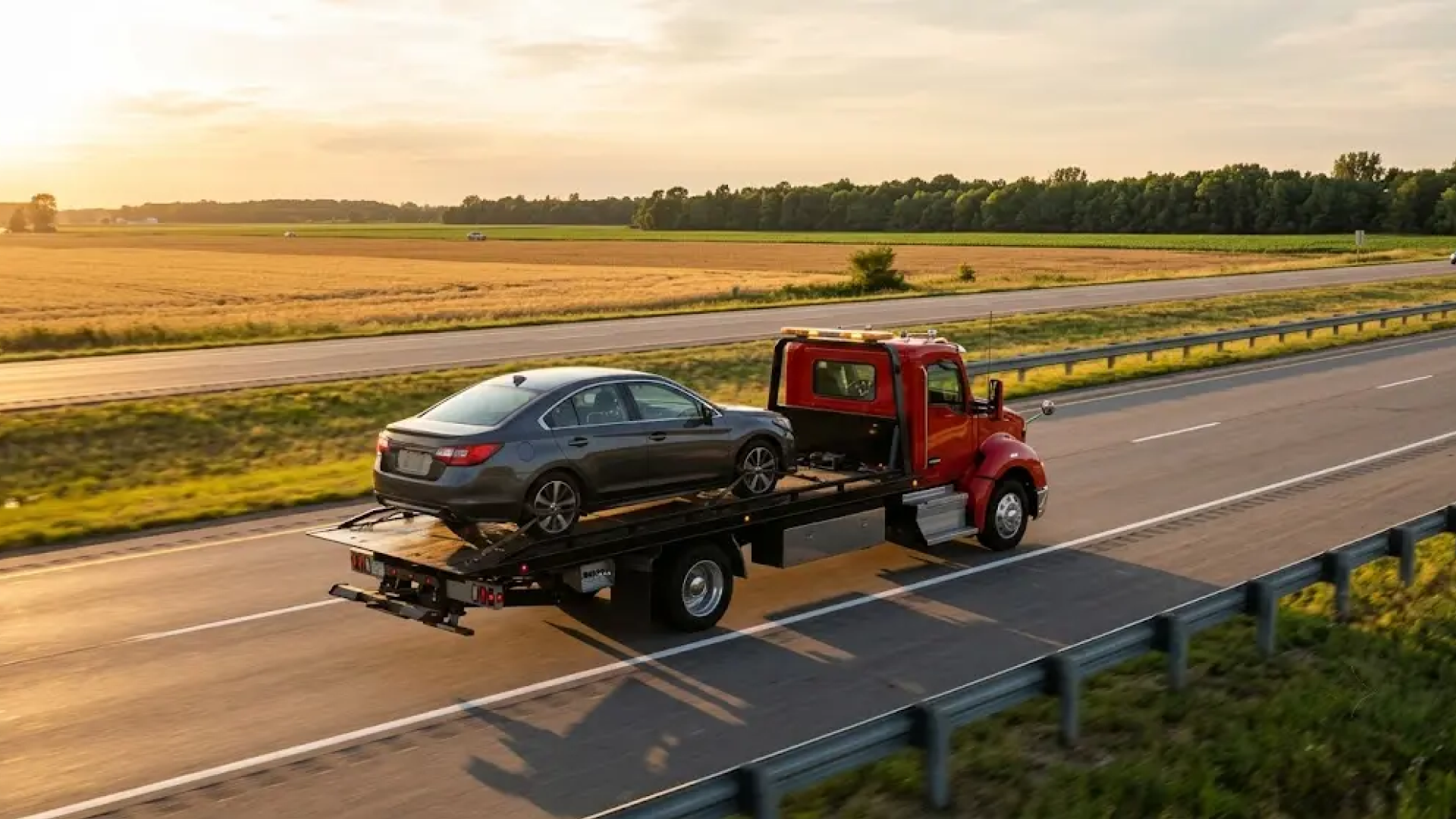
Flatbed towing is commonly used for long-distance vehicle transport because the entire vehicle can be positioned on a level platform rather than leaving its driven wheels on the road.
This can be particularly useful for vehicles that should not be driven, have certain drivetrain concerns, have accident damage, or require additional protection during transportation. Learn more about flatbed towing options.
Vehicles That May Need Special Handling
Not every vehicle should be treated like a standard passenger car.
Special consideration may be needed for:
Motorcycles
Classic cars
Exotic or luxury vehicles
Modified vehicles
Low-clearance sports cars
Disabled vehicles
Vehicles with drivetrain problems
Accident-damaged vehicles
Tell the towing provider about modifications or unusual features before pickup. A lowered vehicle, for example, may require additional care during loading because of its reduced ground clearance.
Prepare a Motorcycle or Specialty Vehicle Differently
Motorcycles and specialty vehicles have different securing requirements from ordinary passenger vehicles.
For a motorcycle, remove loose accessories and personal items. Make sure the handlebars, wheels, brakes, and other relevant components can be accessed as needed for secure transport. Explore our motorcycle towing services for more details.
A specialty vehicle may have unique dimensions, weight distribution, suspension characteristics, or bodywork. Providing accurate information before pickup allows the towing company to plan around those characteristics.
Protect Custom and Delicate Components
If your vehicle has aftermarket parts, custom wheels, fragile bodywork, or expensive accessories, point them out before loading.
Do not assume a driver will know that a particular component is unusually delicate. Clear communication is one of the simplest ways to reduce misunderstandings during vehicle transport.
Make Pickup Day Easier
On pickup day, keep the vehicle accessible and make sure someone is available if an in-person handoff is required.
Move other vehicles or objects that block access. If the vehicle is parked inside a garage, make sure there is sufficient clearance for the towing equipment.
Give Clear Instructions
Tell the driver about anything unusual at the pickup location.
For example, explain if:
The vehicle is parked on a steep slope
The steering is locked
The driveway is narrow
The vehicle cannot roll
There is limited space behind the vehicle
The vehicle has accident damage
The vehicle has a low front bumper
Clear information helps the towing professional assess the situation before attempting to load the vehicle.
Inspect the Vehicle at Delivery
Preparation does not end when the vehicle reaches its destination.
Before the driver leaves, inspect the vehicle against the condition you documented before transport.
Compare the body panels, wheels, glass, lights, mirrors, and other visible components with your original photographs.
Check the Vehicle Before Signing
If you notice a concern, document it immediately and communicate it to the appropriate towing or transport representative.
Keep your original photographs and any transportation paperwork together. Having a clear before-and-after record makes it easier to discuss a question about the vehicle's condition.
Common Mistakes to Avoid Before Long-Distance Towing
Several simple mistakes can make vehicle transport more complicated than necessary.
Leaving Valuables Inside: A vehicle should not become a storage container during transportation. Remove valuables and personal belongings before pickup.
Hiding Mechanical Problems: A dead battery is manageable when the towing company knows about it. A dead battery combined with locked steering, damaged wheels, and no warning can create a much more difficult loading situation.
Forgetting Vehicle Modifications: Suspension changes, oversized tires, roof equipment, and custom bodywork can affect loading. Mention modifications before the truck arrives.
Waiting Until Pickup to Discuss Access Problems: A tow truck needs enough room to position its equipment. If access is difficult, explain the situation in advance.
Assuming Every Vehicle Can Be Towed the Same Way: Vehicle size, drivetrain, condition, clearance, and damage can all affect the appropriate towing method. Equipment should be selected based on the actual vehicle and circumstances.
Long-Distance Transport Preparation Checklist
Before the vehicle leaves, run through this quick checklist:
Confirm the pickup and delivery addresses.
Tell the towing company whether the vehicle runs.
Report mechanical problems, accident damage, and locked wheels.
Remove valuables and loose personal belongings.
Remove or secure detachable exterior accessories.
Check tire condition and visible damage.
Look for obvious fluid leaks.
Photograph the vehicle from all sides.
Photograph existing damage and the odometer.
Make the necessary keys available.
Explain any modifications or unusual equipment.
Make sure the pickup area is accessible.
Keep relevant documents and contact information available.
Inspect the vehicle after delivery.
This checklist takes relatively little time but can make the transport process clearer for everyone involved.
What to Expect From a Professional Long-Distance Tow
Long-distance towing is more than simply connecting a vehicle to a tow truck and driving away. The operator needs to consider the vehicle's condition, loading requirements, equipment, route, and destination access.
For a vehicle that cannot be safely driven, professional towing can provide a practical way to move it without requiring the owner to operate it.
In the DFW area, long-distance towing may be needed after a breakdown, vehicle purchase, relocation, accident, or specialty vehicle move. The right equipment and accurate information are key parts of a safe transportation plan.
For people researching towing services online, the same principle applies to digital information: clear service descriptions, useful educational content, local SEO, and straightforward contact information help customers understand what a company actually provides. Businesses in service industries can also benefit from related digital marketing work such as content marketing, Google Ads, SEO, AI marketing, branding, and broader digital marketing strategy when those activities support real customer needs.
Conclusion
Preparing a vehicle for long-distance transport starts with accurate information and basic organization. Remove personal belongings, document the vehicle's condition, check tires and visible mechanical issues, provide the right keys, and tell Infront Towing about anything that could affect loading or transportation.
The most useful preparation is often simple: know the vehicle's condition, communicate it clearly, document what you see, and make the vehicle accessible for pickup.
Whether the vehicle is a daily driver, accident-damaged car, motorcycle, classic vehicle, or specialty vehicle, preparation gives the towing professional a clearer picture of what needs to be done. A few minutes of planning before pickup can help make the transportation process more straightforward from the first mile to the last.
Frequently Asked Questions
What Should I Remove From My Vehicle Before Long-Distance Transport?
Remove valuables, personal documents, electronics, loose tools, fragile items, food, and other belongings that could move around inside the vehicle. Also ask Infront Towing whether its transportation policy allows any personal items to remain inside.
Should I Take Pictures of My Car Before Long-Distance Towing?
Yes. Photograph the front, rear, both sides, wheels, interior, odometer, and any existing damage. Clear before-transport photographs create a useful record of the vehicle's condition when it was picked up.
Should My Gas Tank Be Full Before Long-Distance Towing?
A full tank is generally unnecessary for vehicle transport. The appropriate fuel level can depend on the transportation arrangement and provider, so confirm the requirement before pickup rather than assuming a specific level.
Can a Non-Running Vehicle Be Transported Long Distance?
Yes, a non-running vehicle can often be transported, but the towing company needs to know that it does not start. Information about steering, brakes, wheels, battery condition, and accident damage helps determine the appropriate loading equipment.
Is Flatbed Towing Good for Long-Distance Vehicle Transport?
A flatbed can be useful for long-distance transportation because the vehicle can be carried on the truck rather than traveling with its wheels on the road. It may also be appropriate for disabled, accident-damaged, specialty, or certain modified vehicles.
Do I Need to Tell the Towing Company About Vehicle Modifications?
Yes. Lowered suspension, oversized tires, custom bodywork, roof accessories, specialty equipment, or other modifications can affect loading and clearance. Providing these details before pickup helps the towing provider plan appropriately.
What Should I Do If My Vehicle Has a Flat Tire Before Transport?
Tell the towing company before pickup. A flat tire may affect how the vehicle rolls or is loaded, particularly if the tire or wheel is damaged. The operator can determine what equipment or approach is appropriate.
Can Motorcycles Be Transported Long Distance?
Yes. Motorcycles can be transported using equipment and securing methods appropriate for their size and design. Remove loose belongings and accessories, and tell the towing provider about custom parts or other features that require special attention.
What Happens If My Car Is Damaged Before Long-Distance Transport?
Document the existing damage with clear photographs and describe it to the towing company before loading. If the damage affects the wheels, suspension, steering, brakes, or ability to roll, provide those details in advance so the appropriate equipment can be arranged.
How Does Long-Distance Towing Work?
Long-distance towing generally involves assessing the vehicle, selecting appropriate towing equipment, safely loading and securing the vehicle, transporting it to the destination, and unloading it. The process varies according to the vehicle's condition, size, type, and transportation requirements.
