

How to Arrange a Tow When Your Vehicle Is Parked in a Tight Space
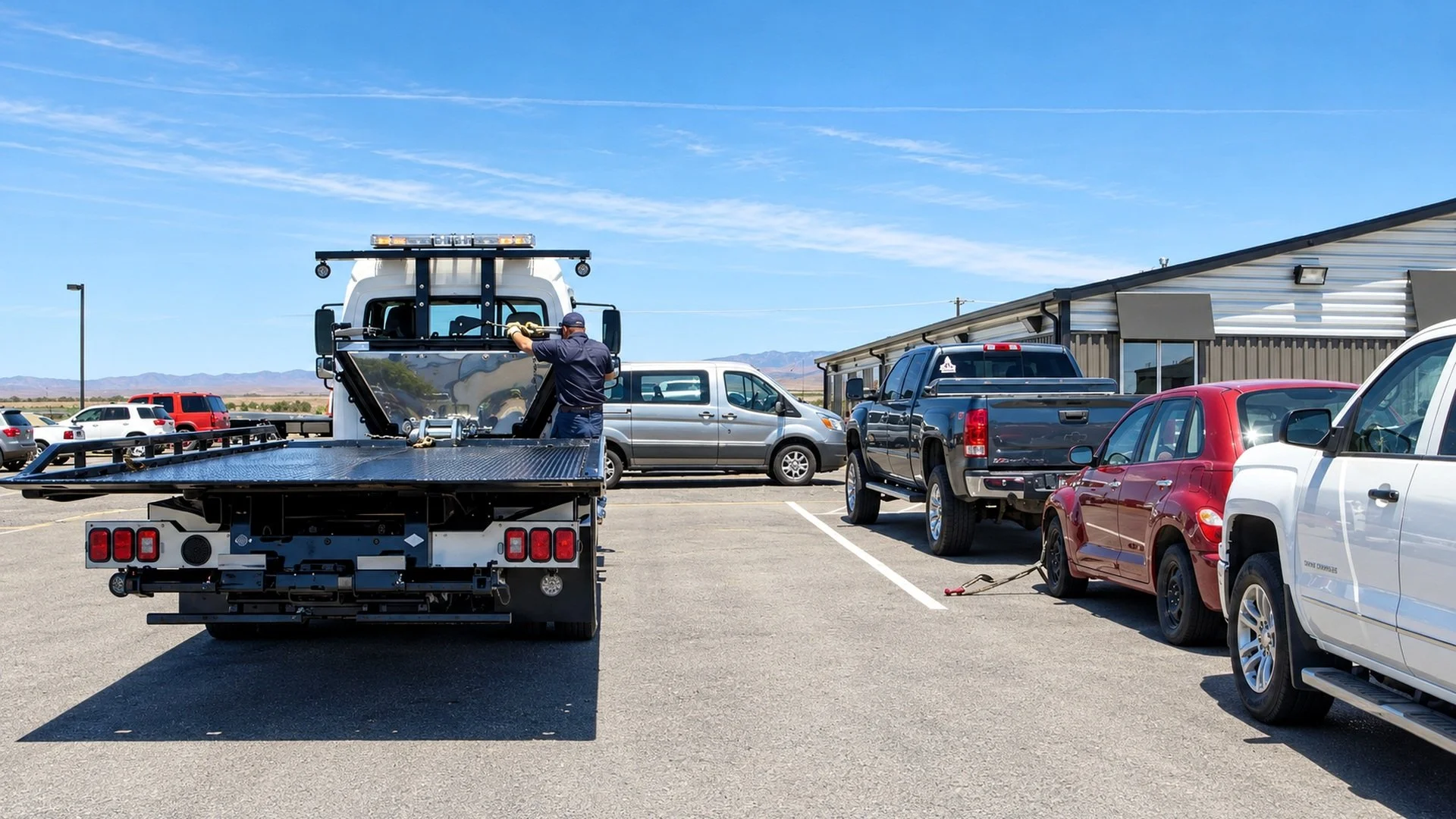
Introduction
A vehicle breakdown is stressful enough without discovering that your car is parked somewhere a tow truck can barely reach. A narrow apartment parking garage, a crowded shopping center, a tight residential driveway, or a vehicle trapped between two parked cars can turn an ordinary towing request into a more complicated recovery.
The good news is that a vehicle parked in a tight space can often be moved safely with the right equipment, a suitable approach, and clear communication with the towing provider. The key is to explain the parking conditions before the truck arrives rather than waiting until the driver discovers the problem on-site.
For drivers throughout Dallas-Fort Worth (DFW), understanding how to arrange towing from a restricted location can save time, reduce unnecessary handling, and help prevent avoidable vehicle damage. It also helps Infront Towing determine whether a standard tow truck, wheel-lift equipment, a flatbed, or a specialized recovery approach is appropriate.
This guide explains how to prepare for a tow in a confined space, what information to provide when requesting assistance, how different towing methods work, and which mistakes to avoid.
Why Towing a Vehicle From a Tight Space Requires Extra Planning
Towing in an open parking lot is different from removing a vehicle from a narrow garage or a crowded driveway. The driver must account for the vehicle's position, available clearance, steering and wheel movement, overhead obstacles, and the space needed to position the tow truck.
Even a relatively small passenger car can present a challenge if its front bumper sits close to a wall or another vehicle.
Common Situations That Make Towing Difficult
Several parking conditions can complicate a towing operation:
Narrow parking garages: Low ceilings, concrete pillars, sharp turns, and restricted entrances may prevent a full-size tow truck from entering.
Crowded parking lots: Vehicles parked closely together can leave insufficient room to attach towing equipment or move a disabled car.
Tight residential driveways: Fences, landscaping, garage walls, and neighboring vehicles can restrict access.
Parallel parking spaces: A vehicle with a mechanical problem may be difficult to pull out without contacting the cars parked in front or behind it.
Underground parking areas: Height restrictions, ramps, and limited turning space can prevent certain recovery vehicles from reaching the car.
Vehicles with damaged wheels: A flat tire, collision damage, or a locked wheel can make it harder to roll the vehicle into a position where it can be loaded.
Recognizing the specific obstacle helps the towing company plan an appropriate approach instead of sending equipment that may not fit.
Why the Vehicle's Condition Matters
The reason your car needs towing is just as important as where it is parked. A vehicle that simply will not start may still roll and steer normally, while one with a damaged suspension or locked wheels may need a different loading method.
Before requesting service, determine whether the vehicle has any known issues involving its steering, brakes, tires, transmission, or drivetrain. Never attempt to move it yourself if doing so could worsen damage or create a safety risk. You can also read more about what happens when a tow truck arrives at your location.
Step 1: Assess the Parking Space Before Calling for a Tow
You do not need to solve the recovery problem yourself. However, a quick assessment can help the towing operator understand what to expect.
Identify Access and Clearance Restrictions
Look at the immediate surroundings and note anything that could limit the tow truck's access.
Consider these questions:
Is the vehicle inside a parking garage or outdoors?
Is there a height restriction at the entrance?
Can a tow truck drive directly to the vehicle?
Is the vehicle facing a wall, another car, or a narrow exit?
Are pillars, fences, curbs, or overhead structures blocking access?
Is there enough room to position a truck behind or beside the vehicle?
Do not assume the towing operator can enter a garage simply because your car fits inside. Tow trucks vary in height, length, turning radius, and equipment configuration.
If the vehicle is underground, ask the parking facility whether it has restrictions on commercial recovery vehicles.
Determine Whether the Vehicle Can Roll and Steer
Tell the towing provider whether the car can move freely. If you are unsure, say so rather than testing it repeatedly.
Useful details include whether the vehicle starts, whether the steering wheel turns, whether the parking brake is engaged, and whether any wheels appear damaged or locked.
A car that cannot roll may require wheel dollies, skates, a winch, or other specialized equipment, depending on the circumstances. The operator must assess which method is suitable for the vehicle and the space.
Safety reminder: Do not crawl beneath the vehicle, force a stuck wheel, release a parking brake on a slope without a safe plan, or push the car between other vehicles.
Step 2: Give the Towing Company Accurate Information
The most useful towing request describes both the vehicle and its surroundings. Clear information helps the dispatcher determine which truck and equipment may be needed.
Explain Exactly Where the Vehicle Is Parked
Provide the complete address, including the building name, garage level, parking section, or nearest entrance when applicable.
For example, saying that your car is on level P2 near the eastern elevator is more helpful than simply providing an apartment complex address.
For a vehicle in a commercial parking facility, include any gate codes or access instructions that the facility permits you to share. Confirm whether the driver needs assistance from security or property management.
Describe the Vehicle and Its Condition
Be prepared to provide:
Vehicle year, make, model, and approximate size.
Whether it is a sedan, SUV, pickup, van, motorcycle, or specialty vehicle.
The reason it needs towing.
Whether it starts, rolls, and steers.
Any damaged tires, wheels, suspension components, or body panels.
Whether the vehicle has all-wheel drive or another drivetrain configuration.
The drivetrain matters because some vehicles can be damaged if towed with the wrong wheels on the ground or handled using an unsuitable method.
Explain the Tightest Part of the Space
Describe the main obstacle rather than simply saying the space is tight.
For instance, explain that the vehicle is wedged between two cars, that a concrete pillar sits close to the driver's side, or that the garage has a posted height restriction.
If possible, take clear photographs from several angles. Include the vehicle, nearby obstacles, the entrance, and any posted clearance signs. Send them through a communication method provided by the towing company.
Photographs cannot replace an on-site assessment, but they can help the operator identify potential access problems before dispatch. For more insights, review what information should you give a towing company when you call.
Step 3: Ask Which Towing Method Is Appropriate
There is no single towing method that works for every confined space. The right choice depends on access, vehicle condition, drivetrain requirements, and the amount of room available.
Wheel-Lift Towing
Wheel-lift towing uses a lifting mechanism to raise one end of a vehicle while the other end remains on the ground, subject to the vehicle and towing configuration.
This method can be useful when a vehicle is parked close to other cars and the operator needs a relatively compact setup. However, adequate working space is still necessary to position the equipment and secure the vehicle.
Wheel-lift towing may be unsuitable for certain damaged vehicles, drivetrain configurations, or situations where the wheels cannot roll safely. The operator should confirm compatibility before proceeding.
Flatbed Towing
Flatbed towing places the vehicle on the platform of a truck rather than transporting it with two wheels on the ground.
It is commonly considered for all-wheel-drive vehicles, vehicles with certain types of damage, and cars that need additional protection during transport. The vehicle is loaded using the truck's loading system, which may involve a winch.
A flatbed is not automatically the best choice for a confined garage. Its overall height, length, ramp arrangement, and loading clearance can prevent it from reaching a vehicle inside a restricted structure.
In some situations, a smaller recovery vehicle or another suitable method may be needed to move the car to an accessible location before flatbed transport.
Dollies, Skates, and Specialized Recovery Equipment
Wheel dollies or vehicle skates can help an operator reposition a vehicle when its wheels cannot roll normally or when limited clearance makes conventional movement difficult.
These tools require proper placement and controlled handling. Their suitability depends on vehicle weight, wheel condition, floor surface, slope, and the available working area.
Specialized equipment may also be necessary when a car has collision damage or a mechanical failure that prevents normal steering.
Ask These Questions Before Dispatch
When speaking with the dispatcher, ask:
Can the proposed truck access my parking area?
Does the height restriction affect which truck can be sent?
Can the vehicle be recovered if its wheels are locked or damaged?
Is a flatbed, wheel-lift truck, or specialized equipment more appropriate?
Will the driver need permission or assistance to enter the property?
These questions help establish realistic expectations without requiring you to choose the equipment yourself.
Step 4: Prepare the Vehicle and Parking Area Safely
Once the towing provider confirms the service arrangement, prepare the area only to the extent that it is safe and permitted.
Move Nearby Obstacles Only When Safe
If you have access to an adjacent parking space, moving your own vehicle or asking another authorized driver to relocate a nearby car may create additional room.
Never move someone else's vehicle without permission. Do not attempt to squeeze between parked cars, drag the disabled vehicle with another car, or push it into traffic.
If the vehicle is in a shared garage, coordinate with building management or security when access needs to be arranged.
Remove Personal Belongings and Secure the Vehicle
Take essential personal belongings with you if you can safely access them. Remove valuables, secure loose items, and have your keys ready for the driver.
Tell the operator if the car has an electronic parking brake, keyless ignition, an unusual gear selector, or a battery that is completely dead. These details may affect how the vehicle can be prepared for loading.
Do not force the transmission into neutral or attempt an unfamiliar electronic release procedure without consulting the owner's manual or a qualified professional.
Keep People Away From the Recovery Area
Bystanders should remain clear while the tow truck is positioned and the vehicle is secured.
A vehicle can shift unexpectedly when a winch pulls against it, a wheel is released, or the car is moved over a slope. Children and pets should remain away from the work area.
If the car is in a public garage, keep the route clear where possible and follow instructions from the operator or property staff.
Step 5: Understand What Happens When the Tow Truck Arrives
A professional recovery operation begins with an assessment, not an immediate attempt to pull the vehicle out.
The Driver Evaluates the Space
The operator will generally examine the vehicle's position, access route, ground conditions, and nearby obstacles. They may also confirm the vehicle's condition and identify the safest available attachment points.
If the truck cannot safely enter the garage, the driver may need to work from outside or use another recovery approach.
Do not interpret a change in plan as unnecessary delay. Using unsuitable equipment in a confined space can create avoidable risks for the vehicle, nearby property, and the people involved.
The Vehicle Is Positioned and Secured
Depending on the recovery method, the operator may attach a winch line, position lifting equipment, use dollies, or make controlled adjustments to the vehicle's position.
The driver should account for nearby cars, walls, pillars, and other obstacles while moving the vehicle. If there is insufficient clearance, the operator may need to reposition equipment or pause until the area can be made safer.
Stay where the driver directs you. Never stand in the path of a winch line, between vehicles, or directly beside moving equipment.
The Vehicle Is Transported to the Destination
Before the tow begins, confirm where the vehicle is going. Possible destinations include a repair shop, dealership, residence, or another approved location.
Tell the dispatcher if the destination has its own restrictions, such as limited loading access or garage clearance. A successful extraction can still become complicated if the receiving location cannot accommodate the delivery truck.
Common Mistakes to Avoid When Arranging a Tight-Space Tow
A few avoidable mistakes can lead to extra coordination, equipment changes, or unnecessary risk.
Providing Incomplete Access Information
An address alone may not reveal that the vehicle is in an underground garage with a low ceiling. Always disclose restrictions that could affect truck access.
If you do not know the exact clearance, say so. A photograph of the posted sign may be more useful than an estimate.
Assuming Every Tow Truck Can Enter Every Garage
Tow trucks come in different sizes and configurations. A vehicle that can fit through a garage entrance may still be unable to turn around or position its loading equipment inside.
Confirm the access requirements before dispatch rather than relying on assumptions.
Trying to Force the Vehicle Out
Pushing, pulling, or driving a damaged vehicle through a narrow gap can worsen mechanical problems or scratch nearby vehicles.
If the car has a damaged suspension, locked wheels, steering problems, or a collision-related defect, let the towing operator determine how it should be moved.
Choosing a Towing Method Based Only on Price
A low initial quote is not helpful if the equipment cannot safely complete the recovery. Explain the situation accurately and ask whether the estimate includes any specialized handling that may be required.
Request clarification about additional charges for difficult access, dollies, winching, garage restrictions, or extra labor before authorizing work.
Forgetting to Check the Destination
Confirm the destination, delivery instructions, and any access limitations before the vehicle is loaded. If a repair shop is closed, ask whether it can accept the vehicle after hours and how the keys should be handled.
These details can help avoid a second transport arrangement.
What Affects the Cost of Towing From a Tight Space?
The price of a confined-space recovery depends on several factors. A standard towing rate may not cover every situation involving restricted access or specialized equipment.
Vehicle Type and Condition
A small car that rolls and steers normally may be simpler to recover than a heavy SUV with locked wheels or collision damage.
Vehicles with unusual drivetrain requirements, low ground clearance, or specialty bodywork may also need additional precautions.
Access Difficulty and Equipment Requirements
A tow from an open driveway may require less setup than a recovery from an underground garage or a vehicle trapped between other cars.
Possible cost factors include:
The time needed to assess and position equipment.
Restricted garage access or unusual clearance requirements.
Use of winching equipment, dollies, or specialized recovery tools.
Additional labor needed to reposition the vehicle.
The distance between the pickup location and destination.
Not every restricted-space tow incurs a separate fee. Charges depend on the provider, the actual work required, and the agreed service terms.
Distance and Service Timing
The transport distance can affect the total cost, and after-hours service may be priced differently by some providers.
Before authorizing the tow, ask for an estimate that accounts for the known access conditions. Confirm what is included, what could create an additional charge, and whether the estimate may change after an on-site inspection.
Special Considerations for DFW Drivers
Dallas-Fort Worth includes downtown parking structures, apartment garages, office complexes, shopping centers, residential driveways, and crowded event parking areas. Each setting can create different recovery challenges.
Downtown Garages and Apartment Complexes
In central business districts and larger apartment developments, height limits, controlled entrances, narrow ramps, and security procedures can affect access.
Check posted restrictions and arrange any required entry permission before the truck arrives. If possible, identify an entrance that is approved for the recovery vehicle.
Busy Shopping Centers and Event Parking
A disabled vehicle may be surrounded by cars that were not present when it was originally parked. Contact parking management if nearby vehicles or traffic controls prevent safe access.
Avoid directing other drivers to move cars unless you have the authority to do so.
Heat, Storms, and Wet Parking Surfaces
North Texas weather can complicate recovery work. Rain may reduce traction on ramps, while intense heat can make waiting in an enclosed vehicle or unshaded parking area uncomfortable.
If conditions make the location unsafe, inform the operator and follow their instructions. Do not stand in a traffic lane or on a slippery ramp while waiting for assistance.
For any breakdown in an active roadway, prioritize personal safety and follow local emergency guidance rather than attempting to manage the recovery yourself. You can learn more through our guide on how weather conditions can affect a vehicle breakdown response.
Conclusion
Arranging a tow when your vehicle is parked in a tight space starts with accurate information and realistic planning. Describe the parking location, identify height and access restrictions, explain the vehicle's condition, and provide photographs when possible.
Ask the towing provider which equipment is suitable rather than assuming that a flatbed or wheel-lift truck will work in every situation. Follow the operator's safety instructions, coordinate with property management when needed, and confirm the destination and expected charges before authorizing the service.
For drivers in the Dallas-Fort Worth area, these steps can make a difficult recovery easier to coordinate. A little preparation helps the towing operator arrive with a clearer understanding of the problem and a safer plan for moving the vehicle.
Frequently Asked Questions
1. Can a tow truck remove a car from a narrow parking garage?
Yes, in many cases, but the available options depend on ceiling height, entrance width, turning space, vehicle condition, and loading clearance. Share the garage restrictions with the towing provider before dispatch so the operator can assess suitable equipment.
2. What should I tell a towing company if my car is stuck between two parked vehicles?
Provide the vehicle's exact location and explain how closely it is positioned to the surrounding cars. Photos from several angles can help. Mention whether the wheels roll and steer, and do not attempt to force the vehicle through a narrow gap.
3. Is flatbed towing possible from an underground parking garage?
Sometimes, but not every flatbed truck can enter or maneuver inside an underground garage. Depending on clearance and vehicle condition, a smaller recovery vehicle or specialized equipment may be needed to move the car to an accessible location first.
4. Can a tow truck move a car with locked wheels?
A vehicle with locked wheels may still be recoverable using suitable equipment, such as wheel dollies or other specialized tools. The appropriate method depends on the cause of the lock, vehicle weight, surface conditions, and available clearance.
5. Should I move my car before the tow truck arrives?
Only if the vehicle can be moved safely and legally without creating additional damage or risk. If the wheels are locked, the steering is damaged, or the vehicle is in a hazardous position, leave the recovery to a qualified operator.
6. How much does towing from a parking garage cost?
The cost depends on towing distance, vehicle type, accessibility, equipment requirements, and any additional labor. Ask for an estimate that accounts for the garage restrictions and confirm which circumstances could result in extra charges.
7. What if the tow truck cannot fit through the parking garage entrance?
The operator may need to work from outside the garage, use a suitable smaller recovery vehicle, or reposition the car with specialized equipment. The available solution depends on the layout, vehicle condition, and safe access to the car.
8. Do I need permission to have a car towed from an apartment complex?
If you are arranging a tow for your own disabled vehicle, check the property's access procedures and any applicable parking rules. You may need help from management or security to open a gate or coordinate access. Never authorize the removal of another person's vehicle without proper authority.
9. Can a car with all-wheel drive be towed from a tight space?
Yes, but the towing method must be compatible with the vehicle's drivetrain and manufacturer's instructions. Some all-wheel-drive vehicles require all four wheels to remain off the ground during transport. Tell the provider the vehicle's make, model, and drivetrain before dispatch.
